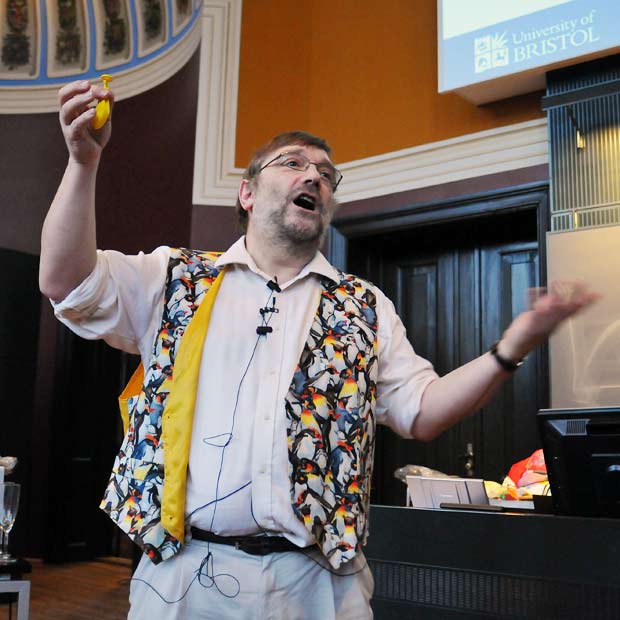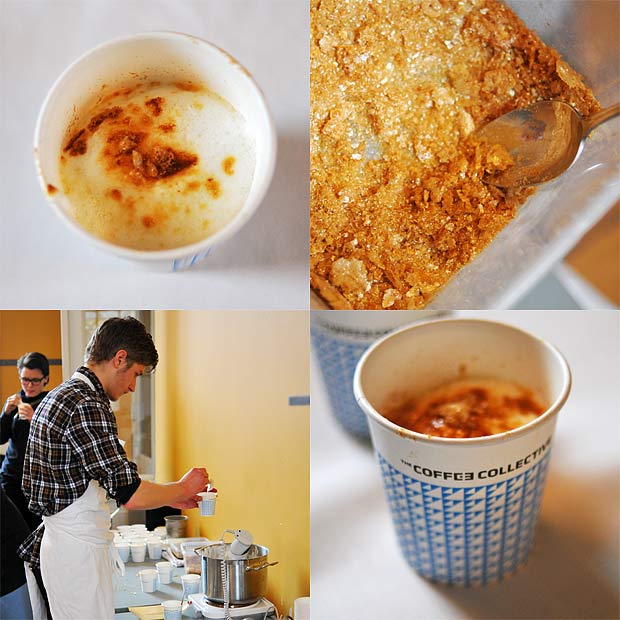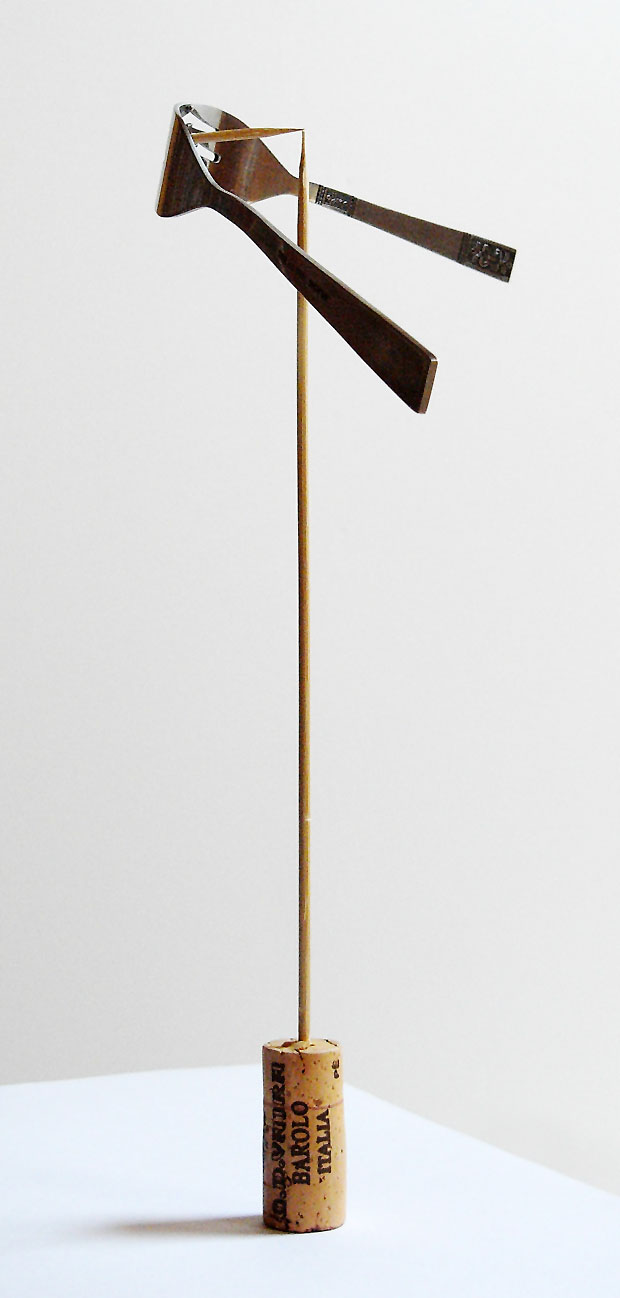
Food Geeks: Liking to eat is one thing, but becoming really familiar with the exact time and water temperature to cook the perfect soft-boiled egg? … This elevates hunger to a seriously geeky level…
I kind of feel a finger pointing at me But believe it or not, there were more than 30.000 who visited the page Towards the perfect soft boiled egg last year (and it was first published in April), so my dear fellow food geek reading this: You are not alone!
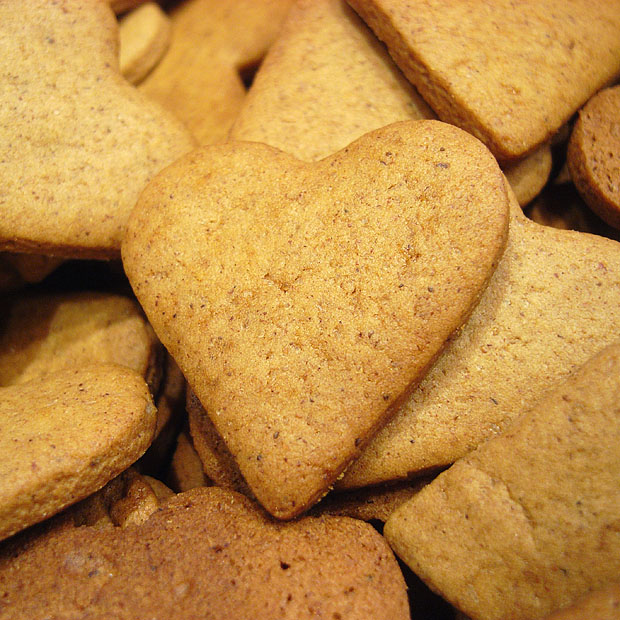
The gingerbread cookies pictured are made with ginger, cloves and cinnamon. I didn’t use ammonium carbonate as a leavening agent for these, so no amphetamines were created “in furno” in this case. But I’m sure the cookies can cheer you up anyway!
A while ago I came across the article “Christmas gingerbread (Lebkuchen) and Christmas cheer–review of the potential role of mood elevating amphetamine-like compounds formed in vivo and in furno” (abstract from NCBI, free full text pdf download from publisher). The paper reviews a hypothesis proposed by Alexander Shulgin in a series of papers appearing in Nature in the 60’s. Shulgin noted that allylbenzenes and propenylbenzens found in many spices are “merely lacking ammonia to become amphetamines”. The author reviews the evidence that such substances may be converted in the body to psychoactive metabolites, but concludes that the evidence is equivocal at best. However, the author launches an alternative theory: (more…)
Here at Khymos I aim to cover things related to food and chemistry, and as I stumbled over a periodic table of cupcakes (with clickable “elements” linked to recipes) I couldn’t resist to dig a little deeper. And look what I found! The periodic table of elements is iconic, but the periodic table has also become an organizing metaphor for all sorts of things, including food. The Internet database of periodic tables holds more periodic tables than you could ever dream of, but it’s not complete – at least not with regards to food. Here are the food related periodic tables that I’ve been able to find. Fun? Yes! Useful? No, not really At the end of the post I’ve also included examples of how the real periodic table of elements can be illustrated in a more or less edible fashion. All images are linked to the page where I found them. Are you aware of other periodic tables of food? Please let me know and I’ll include them in this post. (more…)
For a true multi modal experience I can imagine that restaurants and chefs who are into ORGASMIC, a new proposed acronym for science enabled cooking, will serve desserts accompanied by the orgasmatron (picture via BoingBoing).
The definition and use of the term molecular gastronomy has been a recurringtopichereat Khymos. In my opinion no better name has been deviced, but that may actually change now. I just received an email which let me know that:
A group of influential international chefs have sequestered since yesterday in Alicia, Spain. Their mission has been to find a more palatable term for the dreaded “Molecular Gastronomy”. The consensus seems to be leaning towards ORGASMIC, an acronym for ORganoleptics, Gastronomy, Art, & Science Meet In Cuisine. A final vote on the proposed name change is scheduled for tomorrow morning, followed by the unveiling at a press conference.
Unfortunately information about which chefs have been invited to the event is scarce, so it’s difficult to judge about what impact this will have. Nevertheless, since the acronym includes so many of the different aspects related to molecular gastronomy I likely that the new name will eventually replace the term molecular gastronomy. I’ll update once I have more details!
Update: Fellow blogger Aiden Brooks is currently living in Barcelona and has many more details on this. It seems that there will actually be a new Erice meeting and that the current “secret session” is a run up to the next International Workshop on Molecular and Physical Gastronomy.
I recently stumbled across an interesting article on risk perception: If It’s Difficult to Pronounce, It Must Be Risky – Fluency, Familiarity and Risk perception. Researches from the University of Michigan had students read lists of fictious words and imagining that they were reading food lables and judge the hazard of each ingredient form very safe to very harmful. The words were divided in groups of easy-to-pronounce words (such as Magnalroxate) and difficult-to-pronounce words (i.e. Hnegripitrom). If I were to take the test I’d probably rank Magnalroxate as worse than Hnegripitrom – the “roxate” somehow reminds me of a pesticide or something like that. It turned out however (as expected) that substances with difficult-to-pronounce names were perceived as more harmful than substances with easy-to-pronounce names. (more…)
Chocolatier by profession, Shock-o-Latier by reputation! I bought this box the next day at Dominique’s shop “The Chocolate Line” to bring back home.
As I mentioned in part 1 of the travel report from Brugge, the highlight (for me at least) of The Flemish Primitives seminar was the surprise box presented to us by Dominique Persoone (owner of The Chocolate Line) and his team which included James Petrie (pastry chef at The Fat Duck), Tony Conigliaro (mixologist, bartender at Roka, blogger) and Bruce Bryan (medical doctor and inventor). As the box was distributed in the auditorium (more than 1000 present, mostly chefs) the instructions were kept very simple: DO NOT OPEN THE BOX! Makes you wonder of course what is inside. (more…)
The soda fountain (Diet Coke + Mentos) has been around the net for quite a while with some spectacularvideos available, and it has even made it into a news paper cartoon. People go crazy about this and the largest number of simultaneous fountains is steadilyincreasing.
Despite the interest, only now did a scientific paper appear on the subject. Many have speculated about what causes the reaction between Mentos and Diet Coke, and some have focused on possible acid-base reactions taking place. Mythbusters investigated this in 2006 (watch episode) and came up with the following factors that contribute to the bubble formation:
Diet coke
carbon dioxide is what makes the bubbles form in the first place
in synthetic mixtures aspartam, caffeine and potassium benzoate where shown give better fountains
Mentos
the most important property is the rough surface which provides plenty of nucleation sites for bubble formation
the density makes them sink which is ideal as the bubbles formed at the bottom of the bottle help expel much more soda
mentos contains gelatin and gum arabic which could also reduce surface tension
By measuring contact angles it was shown that aspartame and potassium benzoate reduce the surface tension of water. Aspartame is a winner, and as an extra benefit clean up is much easier with Diet Coke than sugared Coke. The amount of caffeine however is too low to have any effect. The roughness of the Mentos surface was studied with special microscopes (see picture below). Fruit Mentos have smooth patches, but the coating is not uniform and contrary to the Mythbuster experiment normal Mentos and Fruit Mentos performed equally well with regards to foam formation. The roughness of the Mentos surface was inbetween that of rock salt and the Life savers which suggests that roughness is not a single factor determining the reaction. The Mentos surface is covered with gum arabic which reduces surface tension, and experiments showed that even without Mentos, gum arabic could cause a reaction to occur. It is the combined effects of reduced surface tension (due to ingredients in Diet Coke and Mentos) and the rough surface of Mentos which is the key to understand the reaction.
As expected, the article also confirms that the reaction is more vigours at higher temperatures (i.e. solubility of carbon dioxide deacreases with increasing temperature). It was also shown that Mentos sink faster to the bottom of a 2 L bottle compared with rock salt, Wint-O-Green Life savers and sand (this is a function of size and density, not only density). When bubbles are formed at the bottom of the bottle the bubble has more time to grow as it rises. This causes a more explosive reaction and more soda is expelled from the bottle.
The picture shows scanning electron microscopy images of Mint Mentos (a) and (c) and Fruit Mentos with a candy coating (b) and (d). The scale bars in each image represent the lengths (a) 200 μm, (b) 100 μm, (c) 20 μm, and (d) 20 μm. Fruit Mentos has smooth patches, but the coating is not uniform. (Reprinted with permission from Coffey, T. S, American Journal of Physics, Vol. 76, Issue 6, pp. 551-557, 2008. Copyright 2008, American Association of Physics Teachers)
The question which lingers on my mind is whether Diet Coke and Mentos represent the optimal combination of ingredients to create a soda fountain. With regard to convenience, I guess the answer is yes. But perhaps it’s possible to create an even more powerful reaction? Since lowering the surface tension of water is important, I’m wondering if it would be possible to find a surfactant that could be added without setting the reaction off? Mentos would of course still be needed for the rough surface to provide nucleation sites. In the above mentioned study addition of diluted dish washing liquid was enough to give a pretty good reaction, so this is not an option. But perhaps a couple of drops right on the Mentos surface would work? I definitely need to try this some time.
I recently became aware of an excellent site focusing solely on liquid nitrogen ice cream! Ever heard about “The institute for liquid nitrogen ice cream experimental studies” or TILNICES for short? They’re located at the Department of Chemistry at the Tennessee Technological University. It seems that the site is still under construction, but several recipes are already available plus a number of papers (available for download as pdf files).
[Thanks to John Placko on the MG mailing list for mentioning the site]
Some time ago one of my google alerts directed me to a brand new album by Food called Molecular Gastronomy, but it was only yesterday that a friend (check out his review of the CD) sent me a list of the tracks. To my great surprise the first tracked is named after my website – khymos (followed by tracks such as texturas, heston and spherification). Feels like an honour! Thank you Food! I haven’t been able to locate sound samples of the CD, but I’ll post an update if they should become available. The CD can be bought directly from the record company or through Amazon UK.
Slightly off topic (but with links to both food and science): At this time of the year it’s time for the IgNoble prizes – the entertaining cousins of the more serious Noble prizes! And once again several of them are awarded to food related research (in the broad sense that is):
NUTRITION: Brian Wansink of Cornell University, for exploring the seemingly boundless appetites of human beings, by secretly feeding them with a self-refilling, bottomless bowl of soup. REFERENCE: “Bottomless Bowls: Why Visual Cues of Portion Size May Influence Intake,” Brian Wansink, James E. Painter and Jill North, Obesity Research, vol. 13, no. 1, January 2005, pp. 93-100. Mindless Eating: Why We Eat More Than We Think, Brian Wansink, Bantom Books, 2006, ISBN 0553804340.
CHEMISTRY: Mayu Yamamoto of the International Medical Center of Japan, for developing a way to extract vanillin — vanilla fragrance and flavoring — from cow dung. REFERENCE: “Novel Production Method for Plant Polyphenol from Livestock Excrement Using Subcritical Water Reaction,” Mayu Yamamoto, International Medical Center of Japan. PRESS NOTE: Toscanini’s Ice Cream, the finest ice cream shop in Cambridge, Massachusetts, created a new ice cream flavor in honor of Mayu Yamamoto, and introduced it at the Ig Nobel ceremony. The flavor is called “Yum-a-Moto Vanilla Twist.”
MEDICINE: Brian Witcombe of Gloucester, UK, and Dan Meyer of Antioch, Tennessee, USA, for their penetrating medical report “Sword Swallowing and Its Side Effects.” REFERENCE: “Sword Swallowing and Its Side Effects,” Brian Witcombe and Dan Meyer, British Medical Journal, December 23, 2006, vol. 333, pp. 1285-7.
In case you wondered – this is in fact real research which has been published in scientific journals. The IgNoble slogan reads “First it makes you LAUGH, then it makes you THINK”. Enjoy!
I blogged about carbonated strawberries some while ago. Those were made using dry ice which unfortunately is not always easy to get hold of. Last week however I bought a iSi Gourmet Whipper – one of those Ferran Adria uses to make foams/espumas. I plan to experiment with that as well, but the first thing I decided to prepare was carbonated fruit. In fact this is a safe way (the only?) to make carbonated fruit at home using a pressurized container.
The instruction booklet which comes with the iSi Gourmet Whipper only mentions cream chargers (filled with N2O, dinitrogen oxide), whereas soda chargers (filled with CO2, carbon dioxide) are not mentioned (I guess the opposite is true for the iSi Siphons?). This is quite amazing actually! Luckily however the cream and soda chargers are exactly the same size and both hold 8 g of gas. So it should be possible to make carbonated fruit with any of the iSi whippers (cream, easy, gourmet, dessert, thermo) or siphons available.
Here’s how you proceed:
Fill you iSi whipper (or siphon) with fruit, preferably fruit which has a cut, wet surface to allow the carbon dioxide to dissolve in the water/juice.
Screw on top securly
Charge with one soda charger (two if you have the 1 L whipper)
Leave in fridge over night
Release pressure with valve (Important!)
Unscrew top and serve immediately!
Enjoy!
This is what carbonated grapes look like. As you see, I decided to cut the grapes in to halves.
Notice how they sizzle!
A quick recap of the chemistry: cold water dissolves more CO2 than tempered water, that’s why we leave it in the fridge. Also, remember that it takes some time for the carbon dioxide to dissolve in water, therefore it’s better not to be in a hurry. A quick calculation of the pressures gives the following: Both gases have molecular weights of 44 g/mol, so 8 g of gas corresponds to 0.1818 moles or 4.1 L at 25 °C and 1 atm pressure. The volume of the chargers is 0.01 L which gives an initial pressure in the chargers of impressive 445 atm! With an approximate volume of 0.7 L this gives a pressure (in an empty whipper) of nearly 6 atm – the same as in a bottle of champagne. However once you add water, the equilibriums will change and the pressure in the head space will drop. Anyone who remembers how to calculate the head space pressure at equilibrium if the container is filled with 0.5 L of water and cooled to 4 °C?
I’ve done some googling and there is also somemention of making carbonated fruit with an iSi whipper over at Ideas in food.
(The word play in the title works better for those with a mother tongue where iSi would be pronounced just like “easy”!)
Brown
Strong Coffee
Instant Coffee
Black Walnut Shells (boiled)
Orange
Yellow Onion Skins (boiled)
Pink
Beets
Cranberries or Juice
Raspberries
Red Grape Juice
Juice from Pickled Beets
Red
Lots of Red Onions Skins (boiled)
More information about the chemistry behind can be found in the article “Chemistry in the dyeing of eggs” (Journal of Chemical Education, 1987, 291). The article discusses anionic dyes with sulfonate groups. These bond to the cuticle (protein) covering the egg shell forming salt linkages as shown (illustrated using FD&C yellow no. 6):
By lowering the pH (for example by adding vinegar), more amino groups in the proteins covering the egg shell are protonated and thus available for formation of the salt linkages with the anionic dyes.