Archive for the ‘books’ Category

Modernist cuisine website up

Monday, August 9th, 2010

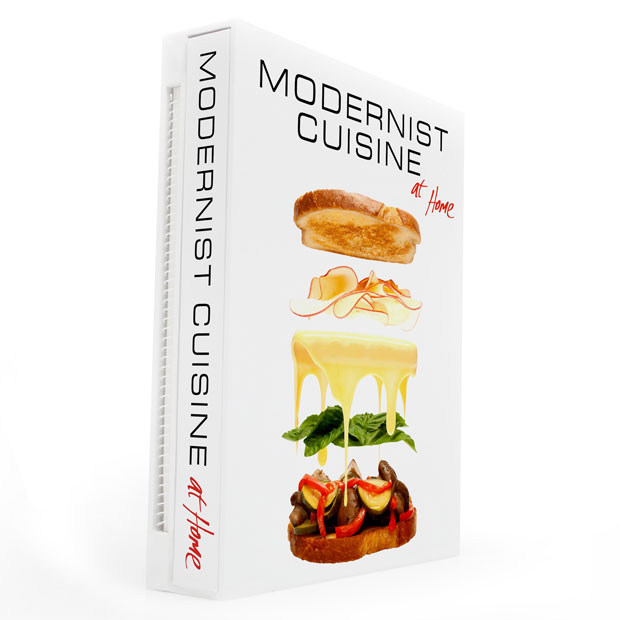
The website to accompany Modernist cuisine is up now. It showcases stunning pictures and example pages, the complete table of contents available in pdf format, details on the exceptional printing quality (stochastic screening and wide gamut inks in case you wondered…) as well as introductions to each volume: History and fundamentals, Techniques and equipment, Animals and plants, Ingredients and preparations, Plated dish recipes – and each page of these pages has additional pictures. It turns out that in addition to the five main volumes there is a 350 page spiral-bound kitchen manual printed on waterproof, tear-resistant synthetic paper (!) with condensed versions of the recipes. And their FAQ page let me know that the complete word count is 650,000. I’ve been looking forward to these books for quite some time, but seeing the pictures just got me to start counting down the days left until December 1st.
(more…)

Interesting books to appear in 2010

Tuesday, August 3rd, 2010

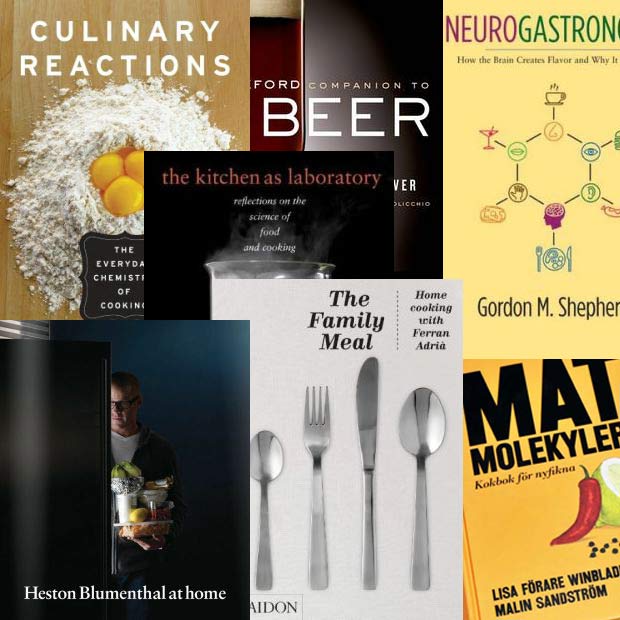
In addition to Modernist Cuisine and Keys to Good Cooking there are so many new books appearing this fall, so to save you from too many blog posts I’ve collected them here in a single posting. These are all books that I find interesting from my popular food science perspective combined with a strong interest for the actual cooking! The books are, in order of appearance: (more…)

New book from McGee: Keys to Good Cooking

Thursday, July 29th, 2010

Harold McGee, author of the seminal On food and cooking: The science and lore of the kitchen (which is one of my favorite non-recipe books for the kitchen) has done it again! The book Keys to Good Cooking: A Guide to Making the Best of Foods and Recipes is to appear in October, but is already available for pre-order as I write. The book is one step closer to the kitchen and the actual cooking than On food and cooking. In a mini Q&A with NY Times in 2008 Harold McGee said the following:

“I’ve heard from many cooks that while they value the scope and depth of “On Food & Cooking,” when they need practical help with a specific technique or ingredient it’s often hard for them to locate the information. So my next book will be nothing but practical information and directions, concise and brief.”

I think it’s fair to say that Harold McGee, more than any other person I know of, has been very successful at distilling scientific work into a very readable and accessible form. He did this back in 1984 with the first edition of On food and cooking, and then again in 2004 with a more or less rewritten edition in 2004. A complete book with practical information rooted in science can easily become the single most useful book in your kitchen!

Modernist Cuisine available for pre-order

Tuesday, July 6th, 2010

When I wrote about Nathan Myhrvold’s book project in November he estimated the book to reach 1500 pages. But what originally started out as a 300-page book on sous vide has now, with the help of a 20-person team, grown to a total of 2200 pages spanning five volumes! Need I say more? Finally the long wait is over: The Modernist Cuisine: The Art and Science of Cooking is now available for pre-order at Amazon, and the expected release date is December 1st. One could almost be afraid that there will not be anything more to blog about here at Khymos as everything will be covered in Modernist Cuisine :) (but I know better – every previous talk about “end of science” has turned out to be more a starting point than a final destination)

Ferran Adrià says that “This book will change the way we understand the kitchen”, and according to Heston Blumenthal it’s “A fascinating overview of the techniques of modern gastronomy”. And if that’s not enough – take a look at this 26 minute video which guides you through the almost endless amount of high-tech equipment Nathan Myhrvold and his team have available. Oh boy, oh boy!

Other links:
The lecture “Cooking in Silico: Understanding heat transfer in the modern kitchen” by Nathan Myhrvold and Chris Young is available for streaming/download from University of Washington.

Nathan Myhrvold in NYT – news on upcoming book

Wednesday, November 18th, 2009

Nathan Myhrvold giving a TED talk about some of his many interest (click image to see video). Photo by Neil Hunt from flickr.com (CC BY-NC 2.0).

Nathan Myhrvold giving a TED talk about some of his many interest (click image to see video). Photo by Neil Hunt from flickr.com (CC BY-NC 2.0).

I usually don’t post about newspaper articles, but Jack Lang sent out an email on the molegular gastronomy maillinglist today about an article in New York Times: “After Microsoft, Bringing a High-Tech Eye to Professional Kitchens” featuring Nathan Myhrvold. I thought this might be of interest to my readers as well.

If you’ve played around with sous vide cooking there’s a good chance that you’ve visited the massive eGullet thread on sous vide (currently spanning more than 100 pages and 3000 posts), and in that case you’ll be familiar with Nathan’s many well informed posts on sous vide. There have been rumours about an upcoming book for quite some time, and things are getting more and more exciting. The last I heard was that he had a team of 5 people working on a book about sous-vide. This has now increased to a team of 15 people, including 5 professional chefs, a photographer, an art director, writers and editors. And there’s more:

“The project has grown in size and scope. Originally planned as a 300-page discussion of sous vide, an increasingly popular restaurant technique of cooking food in vacuum-sealed bags in warm water baths, the book has swelled to 1,500 pages that will also cover microbiology, food safety, the physics of heat transfer on the stove and in the oven, formulas for turning fruit and vegetable juices into gels, and more.”

Wow! Let’s hope that Nathan’s “one year left” statement is actually true this time. I’m really looking forward to see this book!

Sourdough work in progress (part II)

Sunday, October 18th, 2009

sd-bread-1
A sourd dough bread made from a spontaneous starter

After 7 days of feeding my sour dough starter “took off” and was ready for baking. Even with a water bath set to 28 °C it took longer than expected. yeast_kinetics I started off with 100% hydration as this is convenient when you have to feed your starter frequently. Using only whole grain rye flour and water, I fed my starter every 12 hours (I’ve included details of the “feeding schedule” at the end of this post). This time interval is based on the growth cycle of yeast, where the yeast after an exponential growth phase reaches a plateau after 8-12 hours. This is the best time for feeding the starter.

There seems to be a consensus that a wet starter (more…)

(Too many?) New books

Friday, September 11th, 2009

books-2008

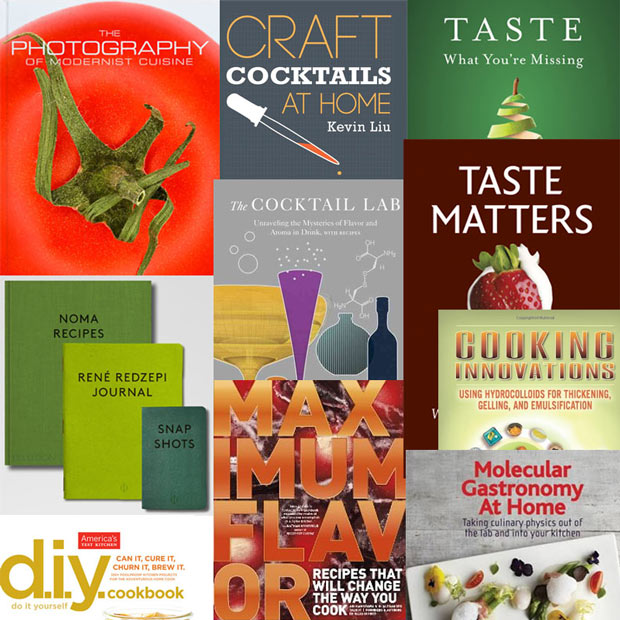
Last year’s book bonanza (Remember The Big Fat Duck Cookbook, Alinea and Under pressure right? Not to mention BakeWise, The Flavor Bible (not science, but I love their systematic approach), Cooking – The Quintessential Art, A day at el Bulli, the bilingual Sous-Vide, the German Verwegen Kochen and the Danish Molekylær gastronomi – did I miss any?) will be difficult to beat, but several interesting books will appear this fall as well. It’s as if this field is exploding with books now. When I first set up the webpages which later evolved into Khymos only a handful of books were available (you can travel back in time and view the single page from 2003 – only in Norwegian, sorry), but even I have a hard time now keeping track with all the books which cover the interesting intersection between cooking and science, aka molecular gastronomy. Sometimes I think – is this book really necessary? Do we need it? What does it add? But addicted as I am, I can’t help it – so I’ll probably get hold of most of these books as they become available :)

(more…)

Cooking by ratios – new book by Ruhlman

Tuesday, April 14th, 2009

ratio-cover

kochen-backen-grundrezeptenOne of the more curious cookbooks I own is a German one entitled “Kochen und Backen nach Grundrezepten” (Cooking and Baking with Base recipes). It was first written in 1932 and has been updated regularily ever since. Each section typically has a standard recipe which indicates the ratios to use followed by suggested variations (just like The improvisational cook). It also has nice summaries of dos and don’ts (just like BakeWise and CookWise), and what really makes the book stand out is that is so compact yet still comprehensive. It’s one of those books I actually use when cooking. Many other books have a little too much text – you have to read a lot to pick up the key points. Anyway – the reason I mention this is that as I read about the new “Ratio” book by Michael Ruhlman (MR books, MR blog), the German cookbook was the first book that came to my mind.
(more…)

Building a meal

Friday, March 13th, 2009

bam_cover_this

There’s a new book by Hervé This available in English: Building a meal – From Molecular Gastronomy to Culinary Constructivism. In the book he examines six bistro favorites — hard-boiled egg with mayonnaise, simple consommé, leg of lamb with green beans, steak with French fries, lemon meringue pie, and chocolate mousse — and discusses the chemistry of the preparation and the eating of these dishes. I haven’t seen the book yet, but it seems to be something like In search of perfection meets On food and cooking. I’ve also had troubles finding the original French title for this one. There is an excerpt chapter covering consommés available from the publisher website.

The Flemish Primitives: Glowing lollipops (part 4)

Wednesday, February 11th, 2009

Bruce Bryan demonstrated a glowing cocktail drink (top left), and tempted us with fluorescent cake frosting (top right). The chocolate surprise boxes included a lollipop (bottom left) and I was quite busy sucking the lollipop, listening to the translation of the Belgian/French/Spanish contributions, taking notes and photographing at the same time (bottom right).

The chocolate surprise box was one of the highlights at The Flemish Primitives that I’ve blogged about three times already. As I promised you in the last post I’d come back to the lollipop that was included in the box. Between chocolates number 2 and 3 Bruce Bryan entered the stage. The lights went off, we were instructed to suck intensely on the lollipos and then – when I took the lollipop out of my mouth it was glowing! (more…)

Has molecular gastronomy reached the plateau of productivity?

Monday, January 26th, 2009

pipa
Loquat fruit (known as pipa in Chinese) piled up at Mercat St. Joseph in Barcelona.

Molecular gastronomy was recently chosen as word of the month (not quite sure exactly which month this was). They give the following definition:

the art and practice of cooking food using scientific methods to create new or unusual dishes

This is not the best definition I’ve seen, to be honest. Why should one limit it to new or unusual dishes? When taken to extremes this only results in gimmickery. Strangely enough there are no hits when I search for “molecular gastronomy” at www.askoxford.com, so one might wonder whether they changed their mind? Personally I feel that molecular gastronomy should strive to improve both home cooking and restaurant cooking. That’s also what I tried to convey with my 10-part series with tips for practical molecular gastronomy.

The Webster’s New Millennium dictionary has this definition:
(more…)

A Christmas wish list

Tuesday, December 16th, 2008

The avalanche of books in the food/science intersection this fall has been truly amazing. Three books in particular have showcased special restaurants: el Bulli, Alinea and The Fat Duck.
(more…)

BakeWise is here

Wednesday, October 1st, 2008

Now this is yet another book I’m looking forward to this fall – I’ve got quite a list now!. Shirley O’Corriher, best known for her book CookWise (not to mention her video “Shirley O. Corriher’s Kitchen Secrets Revealed” and TV appearance in case you live in the US), has been working on this book for a while (NYT article from 2004, free registration requried). Finally it is due to appear in October! The title BakeWise suggests it has the same structure as CookWise. The good thing about CookWise is that the food science theory is applied directly to recipes. In addition it has nice tables on what-went-wrong and what-to-do-about-it. In fact it’s a problem solving manual for the kitchen.

According to the publisher BakeWise “reads like a mystery novel as we follow sleuth Shirley while she solves everything from why cakes and muffins can be dry to génoise deflation and why the cookie crumbles”. And they continue:

Restaurant chefs and culinary students know her from their grease-splattered copies of CookWise, an encyclopedic work that has saved them from many a cooking disaster. With numerous “At-a-Glance” charts, BakeWise gives busy people information for quick problem solving. BakeWise also includes Shirley’s “What This Recipe Shows” in every recipe. This section is science and culinary information that can apply to hundreds of recipes, not just the one in which it appears.

New book by This and Gagnaire

Tuesday, August 5th, 2008

In the seemingly endless series of new books related to molecular gastronomy appearing this fall I just found out that Hervé This and Pierre Gagnaire also have a book due in October: “Cooking – The Quintessential Art”. The book is part of the California Studies in Food and Culture series which features interdisciplinary texts and has been characterized as “an intellectual exercise wholly removed from food-entertainment television”. The book is divided in five parts with the following titles which give further clues to the style of the book: The Beautiful Is the Good, Classical Ideas of Beauty, Beauty in the Middle Ages, Artistic Creativity Unbound, and The Present and Future of Cooking.

The book opens with the question “How can we reasonably judge a meal?”, signifying that this is not a cook book. According to the publisher:

This explores an astonishing variety of topics and elaborates a revolutionary method for judging the art of cooking. Many of the ideas he introduces in this culinary romance are illustrated by dishes created by Pierre Gagnaire, whose engaging commentaries provide rare insights into the creative inspiration of one of the world’s foremost chefs. The result is an enthralling, sophisticated, freewheeling dinner party of a book that also makes a powerful case for openness and change in the way we think about food.

A day at el Bulli

Thursday, July 24th, 2008

There is really no end to all the exciting books that will appear this fall! I just learnt from the molecular gastronomy mailing list that the book “A Day at el Bulli” by Ferran Adrià, Juli Soler and Albert Adrià will appear in October. The publisher let’s us know that the book

documents all the activities and processes that make up just one day of service with stunning colour and black and white photography of the kitchens, staff, creative workshop, dishes, the restaurant itself and its striking surroundings near the town of Roses, north east of Barcelona

The fact that a 600 page book covers a single day at el Bulli says a lot about how much thought they put into their cooking :)