Archive for the ‘videos’ Category

TGIF: Food related “Periodic videos”

Friday, August 20th, 2010

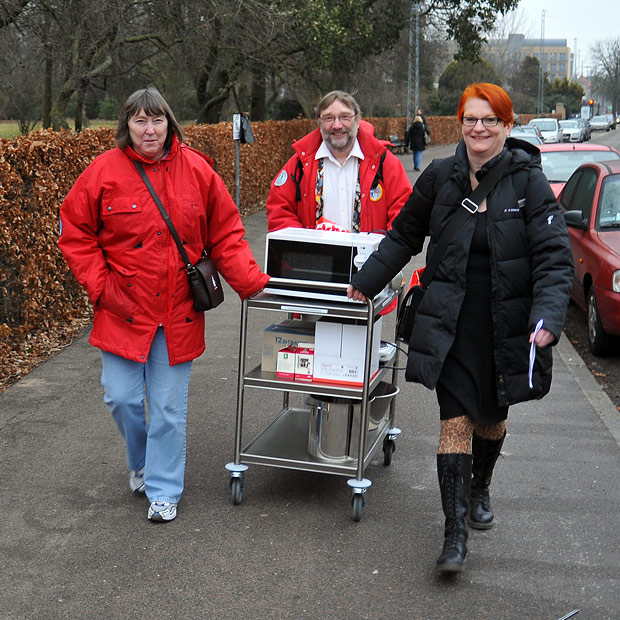
I believe most chemists are familiar with the “periodic videos” from the University of Nottingham, covering all the known chemical elements. The series features professor Martyn Poliakoff who’s grey hair is really worthy of a professor! They have now covered the complete periodic table of elements, and have even started to update some of their previously posted videos. There are also thematic videos as well as videos covering specific molecules appearing now. As a chemist I think the videos are great fun to watch since they show a number of exotic experiments I’ve never seen before combined with plenty of nice-to-know facts. I certainly recommend all these videos (for an overview, check out their website), but the reason I chose to blog about this is that I was delighted to find a number of more or less food related videos! These are definitely not going to make you a better cook. But some of them are quite amusing to watch, and you may even learn some chemistry as you go. But most of the food related videos are really just for fun :)

Cheeseburger in hydrochloric acid

(more…)

TGIF: Science stunts for Christmas parties

Friday, December 11th, 2009

Richard Wiseman has posted a lovely video with Top 10 science stunts for Christmas parties:


(more…)

Nathan Myhrvold in NYT – news on upcoming book

Wednesday, November 18th, 2009

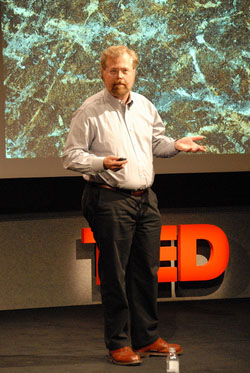
Nathan Myhrvold giving a TED talk about some of his many interest (click image to see video). Photo by Neil Hunt from flickr.com (CC BY-NC 2.0).

Nathan Myhrvold giving a TED talk about some of his many interest (click image to see video). Photo by Neil Hunt from flickr.com (CC BY-NC 2.0).

I usually don’t post about newspaper articles, but Jack Lang sent out an email on the molegular gastronomy maillinglist today about an article in New York Times: “After Microsoft, Bringing a High-Tech Eye to Professional Kitchens” featuring Nathan Myhrvold. I thought this might be of interest to my readers as well.

If you’ve played around with sous vide cooking there’s a good chance that you’ve visited the massive eGullet thread on sous vide (currently spanning more than 100 pages and 3000 posts), and in that case you’ll be familiar with Nathan’s many well informed posts on sous vide. There have been rumours about an upcoming book for quite some time, and things are getting more and more exciting. The last I heard was that he had a team of 5 people working on a book about sous-vide. This has now increased to a team of 15 people, including 5 professional chefs, a photographer, an art director, writers and editors. And there’s more:

“The project has grown in size and scope. Originally planned as a 300-page discussion of sous vide, an increasingly popular restaurant technique of cooking food in vacuum-sealed bags in warm water baths, the book has swelled to 1,500 pages that will also cover microbiology, food safety, the physics of heat transfer on the stove and in the oven, formulas for turning fruit and vegetable juices into gels, and more.”

Wow! Let’s hope that Nathan’s “one year left” statement is actually true this time. I’m really looking forward to see this book!

Kamikaze cookery

Wednesday, October 8th, 2008

There’s a new weekly cooking show you shouldn’t miss. It’s about cooking and science, or “Kamikaze cookery” to be more precise. And there’s a good dash of humor as well which doesn’t hurt. The first episode out is on how to cook that perfect steak (it’s embedded below, but on their site you can watch it at a better resolution). I’ve covered the topic before in my post on DIY sous-vide, but their video is much more entertaining :) They use a vacuum cleaner to suck out the air and a blow torch for the Maillard reaction! There is also a blog accompanying the videos. Hereby recommended!

First experiments with sodium alginate

Friday, March 30th, 2007

Here’s some pictures and a video of my first experiments with sodium alginate and spherification. I used sodium alginate from the Texturas series and calcium chloride from a drug store. Needless to say, I’m very fascinated by the texture and the whole process. I have blogged about the chemistry behind previously.

Materials used:
2.0 g sodium alginate
200 g water (with low calcium content!)
50 g blueberry syrup

2.5 g calcium chloride
500 g water

Procedure:
2 g sodium alginate and 200 g water were mixed vigourously in blender. The mixture was then left to stand for some hours to get rid of the air bubbles. 50 g blueberry syrup was then added to the sodium alginate solution. A calcium chloride bath was prepared by dissolving 2.5 g calcium chloride in 500 g water. The sodium alginate/blueberry mixture was dripped into the calcium chloride bath using a plastic syringe with a steel cannula. After 1-3 min the pearls were removed and rinsed with water.

More detailed procedure with pictures and video:
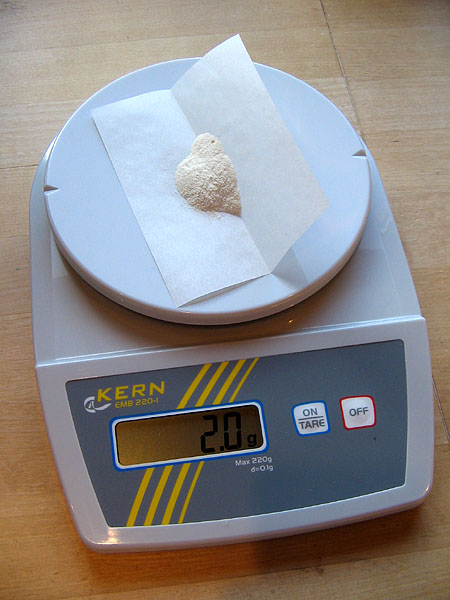
I had to obtain a scale with a 0.1 g accuracy to weigh out 2.0 g of sodium alginate (my first experiments using a normal kitchen scale failed). The model I got cost about $100 and is inteded for school laboratories. Amazon provides several scales with this accuracy.

alginate-1.jpg

I used a blender to dissolve sodium alginate in water. This incorporates a lot of air in the mixture which we don’t want. It could possibly be avoided by using an immersion blender/mixer. However, I just left the alginate solution on the bench and after 3-4 hours the air bubbles had all escaped from the solution.

alginate-2.jpg

Plastic syringes and cannulas can be obtained from your local drug store or pharmacist. I found it was easier to produce evenly sized drops with a sharp cannula (CAREFULL!) than with just the plastic tip of the syringe. This of course depends on the viscosity of the solution. By thickening (with xanthan for instance) you can produce larger drops.

alginate-6.jpg

After 1-3 min the spheres were removed from the calcium chloride solution and rinsed with clean water. I dried the spheres carefully using a kitchen towel or paper.

alginate-7.jpg

alginate-3.jpg

Definitely looks like caviar when presented on a spoon like this!

alginate-4.jpg

Larger spheres were made by filling a small measuring spoon with the alginate mixture (I used a syringe for this so the outsides of the spoon would not be covered with alginate solution) and carefully emptied it into the calcium chloride bath. It takes some trial and error to achieve good results.

alginate-5.jpg

The spheres are suprisingly robust and can be handled without rupturing.

alginate-8.jpg

If cut with a knife, the spheres rupture and the liquid contents flows out.

alginate-9.jpg

The small spheres didn’t taste much, so I could have added more blueberry syrup. The large spheres however had a nice taste. The surprise element when they rupture in your mouth is very nice!

“Dialogos de Cocina” with molecular gastronomy webcasts

Tuesday, March 13th, 2007

Dialogos de Cocina took place in San Sebastian, Spain, on March 12 and 13. Monday’s program featured a session on Technology, Technique and Science which should be of great interest to the molecular gastronomy community. The sessions have been made available as webcasts available in English, French and Spanish. Look out for the following topics:

Monday, March 12

16.00-16.30
Other Ways of Thinking, Toni Massanes (Fundación Alicia).

16.40-17.10
Other Ways of Understanding, Antonio Duch (Fundación Azti).

17.20-17.50
Other Ways of Doing it, Harold McGee.

18.00-18.30
Other Ways of Seeing it, Davide Cassi.

18:40-19:40
What can Science Offer us in Addition to Techniques and Technology?,
Round table discussion with Toni Massanes (Fundación Alicia), Antonio Duch (Fundación Azti), Harold Macgee (writer), Davide Cassi (scientist), Heston Blumenthal (chef).

Update: Kate Hill at IACP (International Association of Culinary Professionals) has written an extensive report on the meeting.

Videos from MG seminar in Belgium

Thursday, January 11th, 2007

Videos from the MG seminar in Belgium held on November 20th last year have generously been made available for free on the net. There are four videos to watch: presentations by Prof. Peter Barham (‘Molecular Gastronomy? The science of taste and flavour’) and Prof. Jorge Ruiz (‘Methods in the kitchen: the science behind’) plus demonstrations by Kobe Desramault and Sang Hoon Degeimbre.

Also, Bernard Lahousse (who is in charge of food for design and a co-organizer of the MG smeinar) has let me know that the next seminar will be held on March 16th with the title “A world of Pinot noir” – focus is on wine, but with live MG demos. Stay tuned!

TGIF: Mechanical gastronomy!

Friday, January 5th, 2007

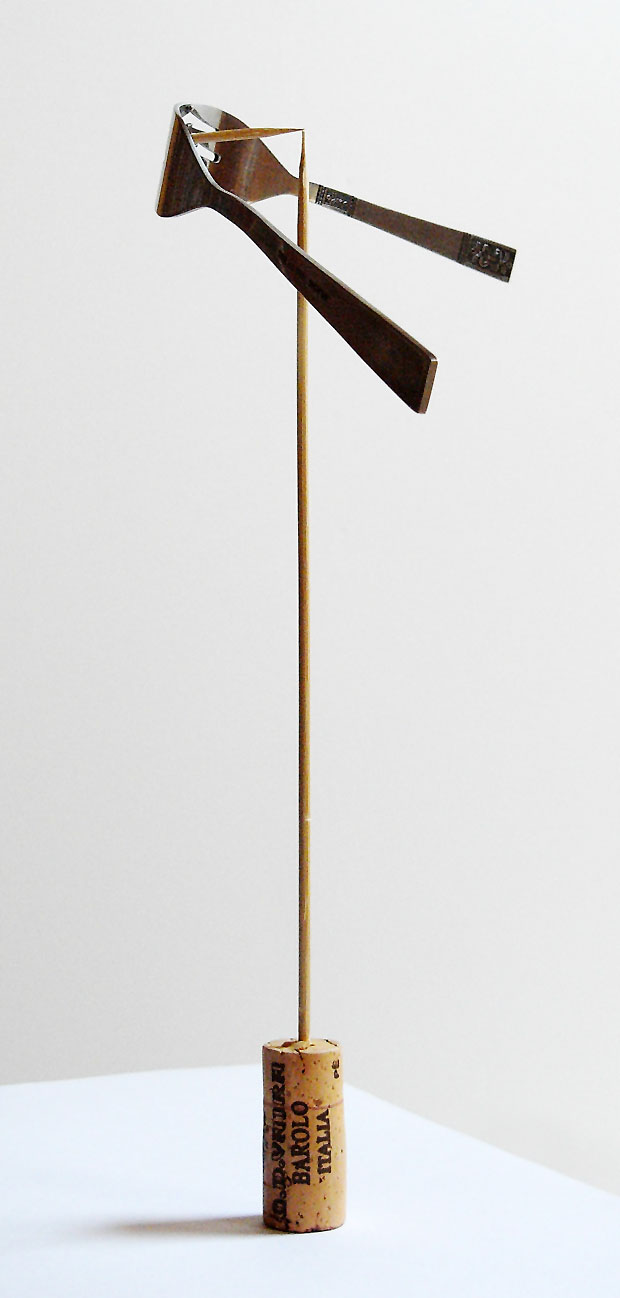
This is slightly off-topic, but take a look at these two videos on mechanical gastronomy. First one is a lego-machine that opens a bottle of beer. The second one is a Rube Goldberg (homepage, Wikipedia) machine that pours a beer (jump to 2:10 if you want to skip the intro and just watch the action). Rube Goldberg described his cartoons as “symbols of man’s capacity for exerting maximum effort to accomplish minimal results”, but has since given name to complicated machines that perform simple tasks!

St. Lucia, saffron and turmeric

Thursday, December 14th, 2006

The day of St. Lucia is celebrated in Scandinavia and some countries in southern Europe on December 13th. In Scandinavia a traditional kind of bun, lussekatt, is normally made and eaten on this day.

lussekatt
Lussekatt (Photo by Jonas Bergsten)

What is exciting about this from a chemical perspective is that they are made with saffron, the world’s most expensive spice (a recipe can be found here). Because of the high price, saffron is sometimes adulterated with turmeric. There is however a simple chemical test to check whether your saffron has been adulterated or not.

The color of saffron comes mainly from crocin, a carotenoid with a sugar attached that makes it water soluble (this is why the color is so easily extracted into water containing foods):

crocin

The aroma arises mainly from the degradation of picrocrocin to release the terpene safranal:

picrocrocin

The yellow color of turmeric comes from curcumin.

curcumin

Upon reaction with a base, curcumin turns bright red whereas crocin is unchanged. Because of this it should be possible to detect whether saffron has been adulterated with turmeric. In the picture below, strips of coffe filters where inserted into suspensions of saffron and turmeric in water (two of each), and those on the right where then held over a bottle of aqueous ammonia. An immediate reaction takes place between ammonia and curcumin, producing a bright red color. I should quickly admit that I haven’t had the opportunity to test this on an “authentic” adulterated sample!

saffron-turmeric

BTW, the color change is very fast as is obvious from the video below (click here if it doesn’t play in the window below):

Video on alginates

Sunday, September 17th, 2006

My fellow blogger on molecular gastronomy, Göde Schüler (check out his German MG blog Gourmetrics) found a great video on YouTube. The video shows how a red beet paste mixed with alginate solidifies when dripped into a solution of calcium lactate (this solution is normally clear, the yellow colour comes from extensive use).

Chef Simon (French, click here for babelfish translation) has a nice page on alginates as well. Another french page here (with english translation by babelfish). You can find links to more technical information (free pdf’s) on alginates in the static pages of khymos.org.

The chemical principles put simply are as follows:
Sodium alginate is water soluble and can be mixed with many different fruit/vegetable juices and purés. When dripped into a solution containing calcium ions, each calcium ion (which holds a charge of +2) knocks away two sodium ions (each holding a charge of +1). The alginate molecule contains loads of hydroxyl groups (OH’s) that can be coordinated to cations (that’s ions with a positive charge such as sodium and calcium).

calcium alginate

When alginate is coordinated to sodium, it’s a very flexible chain. When sodium is replaced by calcium however, each calcium ion (black dots in the image below) coordinates to two alginate chains, linking them together. The flexible chains become less flexible and form a huge network – a gel. The fun thing is that this happens within seconds after the alginate mixture is dripped into the water bath with the calcium ions.

Two alginate chains

Approximate concentrations:

  • Fruit/vegetalbe juice/puré with 1-2% sodium alginte
  • 2% calcium chloride solution (approx. 10g in 1/2 L of water) – because calcium chloride has a slightly bitter taste, it is a good idea to rince these pearls with water before consumption. This is also the reason why calcium lactate is often used in stead (as shown in the video).

Update: The Frog Blog has nice posts with pictures showing how Jay Veregge and Joel Robuchon utilize alginate gels. Also, check out this “caviar” maker for dripping 96 drops of sodium alginate solutions into calcium chloride at once.