Archive for the ‘tips & tricks’ Category

Hydrocolloid recipe collection v.2.1

Wednesday, June 25th, 2008

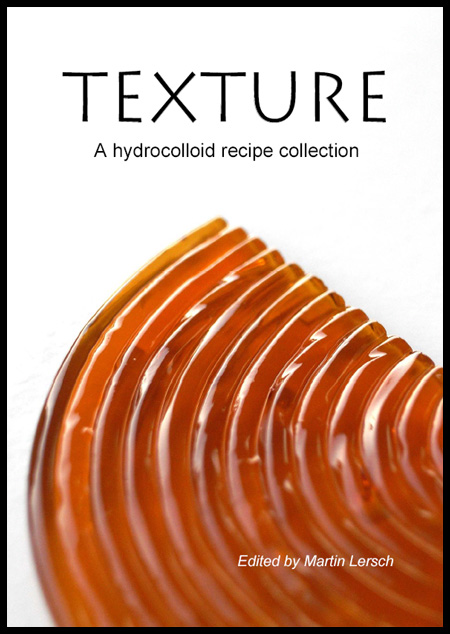
An updated version of “Texture – A hydrocolloid recipe collection” is now available for download (version 2.1). The version includes corrections of typos, minor additions to the property tables plus an important update in the gelatin section and a recipe for agar filtration. Read on for details!

I’m grateful for feedback from several readers pointing out that the size of gelatin sheets is made to compensate for different bloom strengths. In other words, one gelatin sheet will gel a given amount of water, regardless of the size of the gelatin sheet. To the best of my knowledge, this convention seems to have been adopted by most gelatin producers.

All gelatin based recipes have been updated to reflect this and most of them now give the amount of gelatin both in grams (for a platinum type, 240 bloom gelatin) and in number of sheets. I’ve also included a formula for conversion between different bloom strengths. This formula differs from what has been published earlier (no square root), but by testing the formula for given gelatin sheet bloom strengths and weights I got better results by simply multiplying the mass by the ratio of the bloom strengths. If you know more about these formulas, please leave a comment or email me.

Checking the gelatin recipes I discovered that the recipe “Strawberry spheres” originally called for “Sosa vegetable gelatin” which is not gelatin but a mixture of carrageenan and locust bean gum which are dispersed with maltodextrin. Since the exact amount of carrageenan and locust bean gum are not known I’ve deleted the recipe (but I’m sure you could achieve the same coating effect with plain gelatin, perhaps a 3-4% solution to render it viscous so it will cling the the spheres).

Thanks to feedback from a reader there is also recipe now for agar filtration (based on a Spanish forum post). This works just like gelatin filtration, but is much faster. Apparently you get more or less the same results with regard to clarity, flavor and color.

If printing the collection, make sure the hydrocolloid properties table is rotated so it prints correctly. This table is presented in landscape format. The right most column of the first page is gelatin – if you don’t see it, try printing these pages again. The pages are optimized for printing on A4. If printing on Letter sized paper, make sure you check the “resize” or “fit to paper” option in your pdf reader.

Thank you for comments, corrections, recipes and other feedback! As always, I can be reached at webmaster a t khymos d o t org.

Wonders of extraction: Ethanol

Sunday, June 8th, 2008


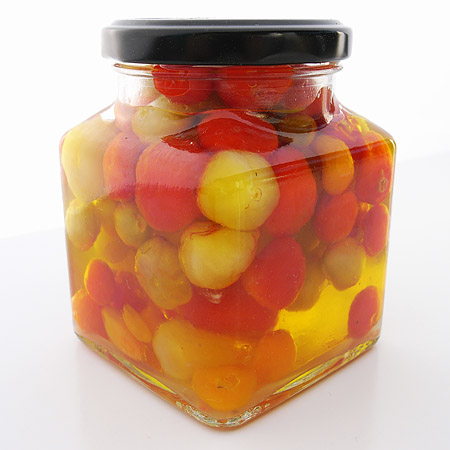
Extraction of cherries with ~45% ethanol in water

Ethanol is a molecule with both a polar and a non-polar end, so it’s properties are somewhat in between those of water and oil (which will be the topic of the next post in this series about extraction). This is easily illustrated by the fact that both water and oil are soluble in pure ethanol (albeit not at the same time – adding water to ethanol reduces the solubility of oil). Many taste molecules are polar whereas most aroma molecules are non-polar, and the good thing is that ethanol can be used to extract both groups of compounds.

I belive the most widespread use of ethanol for extractions in the kitchen is for sweet liqueurs where fruits or berries are extracted with ethanol and the extract is sweetened with sugar. The word liqueur comes from the Latin word liquifacere which means “to dissolve”, and this is essentially what happens – the ethanol and water extract and dissolve flavor and color from the fruit.

Some also make their own spirits by infusing spices and herbs. One example is aquavit which is based on carraway combined with a number of other spices for complexity such as dill, coriander, anis, fennel, liquorice, cardamom and lemon. Commercial aquavits are distilled, but at home it’s suffices to filter of the spices and herbs. As a result home made aquavits are always amber colored (such as the one pictured in a previous post).

For extractions like these, one always uses diluted ethanol, typically 30-60% ethanol in water would be used, and most often somewhere around 40-50%. One reason for this is that higher concentrations of ethanol would extract to many bitter and astringent compounds. Another reason is that in some (most?) countries it is illegal to posess, buy and/or sell ethanol at higher concentrations for consumption (pure ethanol for technical use is denatured if sold in normal stores and requires special permissions if used in laboratories).

Apart from the steping herbs and spices in ethanol to make liqueurs, the only other example of relevance for the kitchen I can think of is for extraction of vanilla beans to make pure vanilla extract. This is quite surprising actually, and although I really don’t know if ethanol is used for extraction in professional kitchens, it is my impression that ethanol extractions are underutilized in the kitchen.

There are several benefits with ethanolic spice and herb extracts:

  • fast – no need to wait for the spices to be extracted since they have been “pre extracted”, you can taste the dish immediately and add more spice extract if necessary
  • no residues – seeds, leaves or bark are filtered off before use
  • convenient – spice extracts are an excellent way of adding clean, concentrated aromas
  • stable – spice extracts keep very well (although the storage may also change the flavor profile somewhat and “mature” the flavor)
  • new flavors – some spices and in particular herbs will change upon extraction and storage and this can open up new possibilities (this needs quite some experimentation though – some herb flavors change to the worse…)

What are your experiences with ethanol extractions in the kitchen?

Wonders of extraction: Water

Tuesday, June 3rd, 2008


Extraction of peppermint leaves with hot water

Water is a polar molecule, meaning that one end has a small negative charge and the other a small positive charge. Because of this water is a very good solvent for other polar molecules and ions. For instance water is the solvent of choice for substances that provide taste, be it salt, sour, sweet or bitter as these are normally quite polar molecules.

A general rule is that the solubility of molecules and ions increases with the temperature of the water. Extractions are therefore faster if the water is boiling. This is the reason why we use hot water to extract tea leaves or ground coffee beans, even if we want to prepare ice tea or ice coffee. But by lowering the temperature and extending the extraction time we can change the relative proportion of what we extract. It therefore makes perfectly sense that different temperatures are recommended for different types of tea. Using different temperatures for the same kind of tea will of course also influence the flavor profile.

Polar molecules are more easily extracted than non-polar molecules. This is evident if we leave a tea bag for a long time in hot water. The bitter taste is due to the slow extraction of large polyphenol molecules which are less soluble in water. If tea is brewed at a lower temperature, less of the bitter tasting substances will be extracted.

Although water is polar, less polar and even non-polar substances can be extracted with water, especially if the water is boiling hot. You do this every day when prepare coffee. If you take a close look at cup of freshly brewed coffee you can notice small pools of oily substances floating on top of the coffee. The more severe conditions used when extracting coffee to make an espresso ensure that even more oily substances are extracted. Other examples of extraction using water in the kitchen include preparation of stock, soups and gravies.

The principle of extraction is simple, but a number of questions remain largely unexplored with regard to flavor: How do ions affect extraction? What role does pH play? How does temperature influence flavor? There is surprisingly little research on this that includes a sensory evalution.

Liquid nitrogen ice cream

Monday, June 2nd, 2008

I recently became aware of an excellent site focusing solely on liquid nitrogen ice cream! Ever heard about “The institute for liquid nitrogen ice cream experimental studies” or TILNICES for short? They’re located at the Department of Chemistry at the Tennessee Technological University. It seems that the site is still under construction, but several recipes are already available plus a number of papers (available for download as pdf files).

[Thanks to John Placko on the MG mailing list for mentioning the site]

Ten tips for practical molecular gastronomy, part 9

Saturday, May 31st, 2008

9. Keep a written record of what you do!

Wouldn’t it be a pity if you couldn’t recreate that perfect concoction you made last week, simply because you forgot how you did it? Last year I made a vegetable soup to which I added garam masala and pepper. I was cooking ad lib, adding a little of this and that without taking notes… Which is annoying, because it turned out very nice! It had a remarkable aftertaste which gave me a somewhat dry feeling on the back of the tongue and it reminded me of mangoes. Even immediately after the meal I wasn’t able to recall all the ingredients.

As an undergraduate student I took an organic chemistry lab course, and I remember we were told not to use post it notes or small pieces of paper for taking notes. Everything should be recorded in a proper journal or – if necessary – small note books. Having finished my Ph.D. a couple of years later, I can only testify to this. Everything you do – be it in the lab or in the kitchen – should be recorded immediately in a journal. It’s amazing how something that was obvious one day, slips your mind a week or month later.

There is a wonderful Donald Duck story by Volker Reiche entitled “The soul of science” (the original appeared in 1981 in the Dutch Donald Duck magazine). At a point “Professor Duck”, who actually works as a janitor in a lab, utters the words “Careful notes are the soul of science” as he is caught experimenting. This is true also for the kitchen and experimental cooking. A German translation of the story was reprinted in the article “Das Leiden des cand. chem. Donald Duck” (open access) in case you want to read the whole story.


Careful notes are also the soul of kitchen science!

When taking notes it’s essential that you are able to re-cook the dish yourself. But if no one else is, the notes are of limited value. The biggest source of uncertainty in the kitchen is the widespread use of volume for measuring powders. This can best be illustrated by the question: How much does a cup of flour weigh?

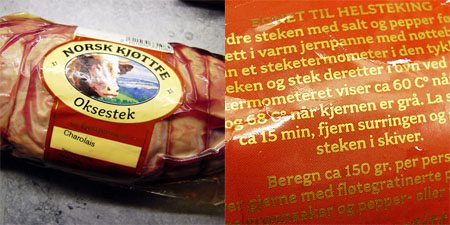
I bumped into this when I began baking no-knead bread (recipe). I converted the recipe to metric units using an online calculator, but the no-knead bread wasn’t a huge success. The problem was that there is no simple answer to the question “How much does a cup of flour weigh?”. Cooking conversion online states that a cup of all-purpose flour weighs 99 g. King Arthur Mills claim that all their flours weigh 113 g/cup. USDA states 125 g/cup and Gold Medal 130 g/cup. Some cookbooks have settled at 140 g/cup (apparently because this is about half way between a loosely and densly packed cup) and if the flour is hard packed you can reach 160 g/cup. In other words – when following a recipe you would need to know how the volume of flour was measured in order to use exactly the same amount of flour. Some recipes call for “spoon and level” or “scoop and level”, but many do not include any information about this.

My recommendation is to weigh all dry ingredients (and preferably also the wet ingredients). A normal digital kitchen scale typically has a resolution of 1 g with an accuracy of +/- 5 g and they are quite affordable. Weighing liquids is also far more accurate than the average volume measurement in the kitchen. If the scale has a “tara” function it’s also much faster as you can zero the display after each ingredient you add. It shouldn’t come as a surprise that I’m not the only chemist advocating weight measurements in kitchen. And it’s not difficult finding other sites in favor of weight measurements either.

It therefore puzzles me why recipes that call for the following are still so abundant:

1 pack of instant yeast
1 envelope unflavored gelatin
1 gelatin sheet (see comment #4-5)
1 sachet powdered pectin
1 tablespoon liquid pectin
1 stick of butter
… and the list goes on

The only exception to the general advice on weighing ingredients is when very small quantities are used. This could be spices, food coloring or hydrocolloids. With normal kitchen scales, you’ll be better of using volume measurements for amounts less than 5 g (equal to a teaspoon if measuring water). Otherweise it’s worthwhile mentioning that scales with a 0.1 g and 0.01 g readout are getting cheaper and cheaper.

*

There is a summary of the “10 tips for practical molecular gastronomy” posts. The collection of books (favorite, molecular gastronomy, aroma/taste, reference/technique, food chemistry) and links (people/chefs/blogs, webresources, institutions, articles and audio/video) at khymos.org might also be of interest.

Hydrocolloid recipe collection v.2

Wednesday, May 21st, 2008

Texture – A hydrocolloid recipe collection
It’s a pleasure for me to announce that an updated version of the hydrocolloid recipe collection is available for free download as a pdf file (73 pages, 1.8 Mb).

What’s new?
Several new recipes have been added (now counting more than 220 in total), including recipes with cornstarch, guar gum, gum arabic, konjac and locust bean gum. All in all 14 different hydrocolloids are included (plus lecithin which technically isn’t a hydrocolloid). In each section recipes are now sorted according to the amount of hydrocolloid used. The appendix has been updated with tables for comparison of hydrocolloid properties, hydrocolloid densities and synergies. The perhaps biggest change is that all recipes have been indexed according both to the texture/appearance of the resulting dish and according to the hydrocolloid used. Let’s say you want to make spheres, this index will show you which hydrocolloids can be used (that’s right – there are other possiblities than sodium alginate) and list the example recipes.

Foreword
A hydrocolloid can simply be defined as a substance that forms a gel in contact with water. Such substances include both polysaccharides and proteins which are capable of one or more of the following: thickening and gelling aqueous solutions, stabilizing foams, emulsions and dispersions and preventing crystallization of saturated water or sugar solutions.

In the recent years there has been a tremendous interest in molecular gastronomy. Part of this interest has been directed towards the “new” hydrocolloids. The term “new” includes hydrocolloids such as gellan and xanthan which are a result of relatively recent research, but also hydrocolloids such as agar which has been unknown in western cooking, but used in Asia for decades. One fortunate consequence of the increased interest in molecular gastronomy and hydrocolloids is that hydrocolloids that were previously only available to the food industry have become available in small quantities at a reasonable price. A less fortunate consequence however is that many have come to regard molecular gastronomy as synonymous with the use of hydrocolloids to prepare foams and spheres. I should therefore emphasize that molecular gastronomy is not limited to the use of hydrocolloids and that it is not the intention of this collection of recipes to define molecular gastronomy.

Along with the increased interest in hydrocolloids for texture modification there is a growing scepticism to using “chemicals” in the kitchen. Many have come to view hydrocolloids as unnatural and even unhealthy ingredients. It should therefore be stressed that the hydrocolloids described in this collection are all of biological origin. All have been purified, some have been processed, but nevertheless the raw material used is of either marine, plant, animal or microbial origin. Furthermore hydrocolloids can contribute significantly to the public health as they allow the reduction of fat and/or sugar content without loosing the desired mouth feel. The hydrocolloids themselves have a low calorific value and are generally used at very low concentrations.

One major challenge (at least for an amateur cook) is to find recipes and directions to utilize the “new” hydrocolloids. When purchasing hydrocolloids, typically only a few recipes are included. Personally I like to browse several recipes to get an idea of the different possibilities when cooking. Therefore I have collected a number of recipes which utilize hydrocolloids ranging from agar to xanthan. In addition to these some recipes with lecithin (not technically a hydrocolloid) have been included. Recipes for foams that do not call for addition of hydrocolloids have also been included for completeness. Some cornstarch recipes have been included to illustrate it’s properties at different consentrations. Recipes where flour is the only hydrocolloid do not fall within the scope of this collection as these are sufficiently covered by other cook books.

All recipes have been changed to SI units which are the ones preferred by the scientific community (and hopefully soon by the cooks as well). In doing so there is always uncertainty related to the conversion of volume to weight, especially powders. As far as possible, brand names have been replaced by generic names. Almost all recipes have been edited and some have been shortened significantly. To allow easy comparison of recipes the amount of hydrocolloid used is also shown as mass percentages and the recipes are ranked in an ascending order. In some recipes, obvious mistakes have been corrected. But unfortunately, the recipes have not been tested, so there is no guarantee that they actually work as intended and that the directions are complete, accurate and correct. It appears as if some of the recipes are not optimized with regard to proper dispersion and hydration of the hydrocolloids which again will influence the amount of hydrocolloid used. It is therefore advisable to always consult other similar recipes or the table with the hydrocolloid properties. The recipes have been collected from various printed and electronic sources and every attempt has been made to give the source of the recipes.

Since recipes can neither be patented nor copyrighted, every reader should feel free to download, print, use, modify, and further develop the recipes contained in this compilation. The latest version will be available for download from the static Khymos site and will also be announced here. I would like to thank readers for giving me feedback and suggestions on how to improve the collection. Feedback, comments, corrections and new recipes are always welcome at webmaster (a t) khymos ( dot ) org.

10 elements of basic kitchen knowledge

Tuesday, May 13th, 2008


Salt in oil. According to Pierre Gagnaire, this is Hervé This’ main discovery. It allows him to sprinkle salt on dishes without the salt dissolving in water from the dish. Thereby the “crunch” of the salt is retained.

Rob Mifsud, perhaps best know for his Hungry in Hogtown blog has interviewed Hervé This. At the end of the interview Hervé lists 10 elements of basic kitchen knowledge. Some may seem obvious, but they are not, according to Hervé. Here’s the list so you can judge by yourselves:

  1. Salt dissolves in water.
  2. Salt does not dissolve in oil.
  3. Oil does not dissolve in water.
  4. Water boils at 100 °C (212 °F).
  5. Generally foods contain mostly water (or another fluid).
  6. Foods without water or fluid are tough.
  7. Some proteins (in eggs, meat, fish) coagulate.
  8. Collagen dissolves in water at temperatures higher than 55 °C (131 °F).
  9. Dishes are dispersed systems (combinations of gas, liquid or solid ingredients transformed by cooking).
  10. Some chemical processes – such as the Maillard Reaction (browning or caramelizing) – generate new flavours.

Ice cubes and air bubbles

Sunday, April 13th, 2008

Ice cubes are used both to cool drinks, but also to significantly impact the flavour of certain drinks. No matter your motivation, you should never use “old” ice cubes which have been sitting in your freezer for a while. Why? Melt some “old” ice cubes and taste the water. You’ll smell why! The reason is that volatile compounds in your freezer slowly find their way into the ice cubes which for some reason mostly are made in trays without a cover. But as I surfed around, researching this post I discovered that oxo and other producers now sell ice cube trays with lids. That’s a small step forward!

Another thing about ice cubes is that they look nice. I admit that air bubbles can sometimes be quite beautiful (and even artistic when pictured with a macro lens as above), but there are times when I whish I could make perfectly clear ice cubes. At room temperature a certain amount of air is dissolved in water. When you cool water, the solubility of air increases (!), but only until the water starts freezing. At this point the water can no longer keep the air dissolved and a bubble is formed. Vice versa – when you boil water the solubility of air decreases and the dissolved gases escape.

When making ice cubes, the bubbles that are formed can easily escape as long as there is no ice blocking their way. This is sort of a catch 22 situation since the air expulsion is directly related to the ice formation. When making ice cubes in a normal freezer, the ice cubes are cooled from the outside, causing the air to get trapped throughout the ice cube.

Many people have thought about smart ways to achieve this (as a quick patent search shows). There are two strategies to obtain clear ice cubes. Let the gas escape while the water freezes or degas and filter the water before freezing. Icicles are a good example that when running water freezes, it normally produces very clear ice. This is utilized in commercial ice cube makers. Here a “cold finger” is exposed to water that moves. This way bubbles are carried away before they can get trapped. These ice cubes typically are ring or cup shaped. The second method is suggested many places on the net. I’ve listed them here together with some thoughts and discussion.

Degassing
Degas the water (i.e. remove the dissolved air). This is easily done by boiling the water for a couple of minutes and letting it cool again. Some webpages suggest that the process should be repeated for best results.

Slow cooling
If the water is cooled too quickly, the ice will not be able to push the impurities ahead of the freezing interface. But if an ice cube freezes from all sides it doesn’t really help as the bubbles get trapped in the middle. A drawback with slow cooling is that the solubility of gas will increase when the water is cooled and so it will allow more gas to dissolve before the water freezes. So slow cooling should probably be combined with some kind of gas tight cover.

Directional cooling
I’ve been pondering about making trays with insulated sides and cover and a metal base, thereby utilizing the fact that metals are superb heat conductors compared to plastic, wood or glass. The metal would then serve to conduct away heat from the water. Bubbles would form on the ice front, but they would probably escape, rather than become encapsuled into the ice. I’ve tried to illustrate it here:

Turns out that someone has actually patented something similar where metal “fingers” are used to conduct away heat from the center, giving ring shaped ice cubes. Does anyone know if these were ever made for sale? Perhaps an ice cube tray in aluminum would work if one insulates the top so that the cubes freeze from the bottom and up, keeping the water on top free flowing so bubbles can escape.

Layer-by-layer method
There might be a simple (but time consuming) way of achieving directional cooling: By building up the ice cubes layer by layer. Once the first layer is frozen this will help freeze the next layer from the bottom up and so on. I guess layers of 1-5 mm would work, but this needs more testing. My experiments so far have not been very promising. Plenty of bubbles, even with a layer of only 2 mm.

Filtering
Particles can act as nucleation sites for air bubbles. To avoid this filter the water and make sure that all the equipment is clean. Also, don’t use a towel to try your equipment as this will probably leave small fibers behind.

Remove salts
Both tap water and bottled water contain trace amounts of salts. When water freezes these minerals are not incorporated into the ice structure. As a consequence the soluble salts will concentrate in the water that’s not yet frozen. In the end there is so little water left that the concentration of the salts becomes sufficiently high so that the freezing point of this remaining water is lower than the temperature in the freezer (meaning that this water won’t freeze). Other salts, especially calcium salts such as calcium carbonate will precipitate. And these particles can act as nucleation sites. If after boiling water there are particles present, these should be filtered away before freezing. The easiest way to get rid of salts is to use distilled water.

I’ve done a couple of experiments and it seems there is no quick fix. The water in the ice cubes pictured above was boiled for several minutes before freezing, but plenty of bubbles formed as you can see. I also tried the layer-by-layer method, but even in a thin layer of only 2-3 mm I could detect many bubbles. So clearly I need to do more experiments.

What are your experiences with making clear ice cubes?

Osmosis in the kitchen

Wednesday, April 9th, 2008

Lettuce should be fresh and crisp but upon storage water will eventually evaporate. The pressure inside the cells drops and the leaves shrink and become less appetizing. The simple yet effective remedy is to immerse the lettuce leaves in plain, cold tap water. The water will then diffuse back into the cells again. The process is known as osmosis [wikipedia].

For the following experiment I purposly left some lettuce (Lactuca sativa var. crispa, sold in Norway under the name “Rapid”, it’s a Summer Crisp/Batavian cultivar) to really dry out as you can see from the picture.

After approximately 4 hours in water the leaf looks like this. Notice that along the rim the leaf was so dry that the cells were damaged “beyond repair”.

To illustrate this relatively slow process I set my camera to take a picture every minute and left it for almost 4 hours. I then stiched it together and the resulting time lapse movie shows the process speeded up 720x (click if the embedded video won’t work).

The wonderful thing about this simple experiment is that it actually illustrates the essence of a recently rewarded Nobel prize (and I should thank Erik Fooladi for pointing this out to me)! The 2003 chemistry prize was awarded “for discoveries concerning channels in cell membranes”. The swedish Nobel foundation have excellent pages with further explanations for the public and for specialists alongside an illustrated presentation (recommended!). There are even two animations of which the first is also available on youtube (embedded below, poor resolution, download the original for higher resolution!). It shows how water molecules move through cell membranes:

TGRWT #10: Pizza with blue cheese and pineapple

Tuesday, March 25th, 2008

pizza-stone-art.jpg
This piece of art was recently sold at an auction for $ 35 million USD! No … just kidding. Read on to find out more!

For the 10th round of TGRWT I decided to modify one of my favorite pizza recipes. As it already has some blue cheese I decided that I would just add som pineapple to the sauce and see how that would work out. Knowing that pineapple works quite well on pizza (at least I have childhood memories from a pizza place called “Aloha” where they served a “Hawaiian delight” pizza with pineapple, ham and cheese) I was quite optimistic about this combination.

pizza-close-up.jpg

Normally I don’t use a recipe for the dough. I only remember to use 1 dL water per person. Everything else is added ad lib. But to give you a proper recipe I measured all the ingredients. Using 4 dL water gives approximately 1 kg dough in total. This gives 3 pizzas with a diameter of about 26 cm, serving 3-4 people. If you like you can roll the dough out thinner and make 4 pizzas and stretch the sauce and toppings correspondingly.

pizza-rising-dough.jpg

Pizza dough
4 dL water
5 g salt
5 g fresh yeast
580 g flour (plain white)
20 g olive oil

Add salt and yeast to luke warm water (~37 °C) and stir to dissolve yeast. Add flour in portions, reserving about 40 g. Mix/knead well for a couple of minutes. The dough is quite sticky. Add the olive oil. Mix/knead more. Add the remaining flour and fold the dough a couple of times. Cover and let rise for 1-2 hours.

Addition of 2% oil helps to give a lighter texture. But mix/knead the dough first so you form the gluten network before you add the oil. Otherwise the oil will cover the glutenin and gliadin proteins and inhibit the formation of gluten, rendering the dough less elastic.

pizza-sauce-bluecheese.jpg

Pizza sauce
45 g sardines (I used King Oscar “Mediterranean style”)
3 t capers
2 T tomatoe paste
1 clove garlic
4 pineapple rings

Mix everything in a small food processor. (You can also add some olives if you like.)

Blue cheese sauce
75 g blue cheese
75 g crème fraîche

Crumble the blue cheese, add the crème fraîche and mix until smooth.

Toppings
1-2 onions, in rings
50 g pepperoni
100 g cheddar, grated

Assemble the pizza as follows. Roll out approximately 330 g dough and place it on a suitable pizza peel (if you forget this you won’t be able to transfer the pizza to the baking stone). Add pizza sauce, blue cheese sauce, onion rings, pepperoni and cheddar cheese. Transfer to a preheated pizza stone and bake at 250-300 °C until nicely browned. Depending on temperature this typically takes around 5-10 min.

pizza-animated.gif

The key to a good pizza is turning up the heat! I usually set my oven around 250 °C, but you can go even higher if you like. Secondly you want to use a pizza stone (also known as a baking stone) to get that nice oven spring and a crisp crust. The picture at the top of this blog post is just a close up of my pizza stone! The black speckles are the carbonized remains of cheese and pizza sauce. I’ve blogged about the science of pizza stones previously:

A baking stone is made from a porous ceramic material. It’s heat capacity is good (much higher than that of a metal plate/sheet) and as a result, when the cold dough is placed on the baking stone, it still has enough heat to make the pizza rise immediately. Secondly, the fact that the baking stone is porous lets it absorb moisture from the pizza. This is what gives the nice crisp crust as it transports moisture away from the pizza.

pizza-stone.jpg

Verdict:
The original version of this pizza (without pineapple) is one of my absolute favorites and tinkering a little with the recipe doesn’t change this. But even so I felt that the pineapple diluted the pizza sauce and that the sweetness took away too much of the saltiness of the pizza sauce. Unfortunately, when making the pizza sauce, I discovered that my tube of tomato paste was empty so I used ketchup in stead. In retrospect I see that this wasn’t a good choice as ketchup is quite sweet. Therefore it’s not fair to say that all the extra sweetness came from the pineapple, but it nevertheless contributed with a lot of sweetness.

The overall flavor was very nice though, and my wife thought this pizza was better. Personally however I prefer the “original”. But perhaps next time I’ll try to add pineapple chunks in stead of churning it together with the sauce so as to concentrate the pineapple flavour more and allow it to come in small “flavor packs” now and then. I think that might work better.

pizza-wine-closeup.jpg
Serve with red wine and a fresh salad!