Posts Tagged ‘beer’

TGIF: Periodic tables of food

Friday, October 30th, 2009

pt-blank
Does food fit into this table?

Here at Khymos I aim to cover things related to food and chemistry, and as I stumbled over a periodic table of cupcakes (with clickable “elements” linked to recipes) I couldn’t resist to dig a little deeper. And look what I found! The periodic table of elements is iconic, but the periodic table has also become an organizing metaphor for all sorts of things, including food. The Internet database of periodic tables holds more periodic tables than you could ever dream of, but it’s not complete – at least not with regards to food. Here are the food related periodic tables that I’ve been able to find. Fun? Yes! Useful? No, not really :) At the end of the post I’ve also included examples of how the real periodic table of elements can be illustrated in a more or less edible fashion. All images are linked to the page where I found them. Are you aware of other periodic tables of food? Please let me know and I’ll include them in this post.
(more…)

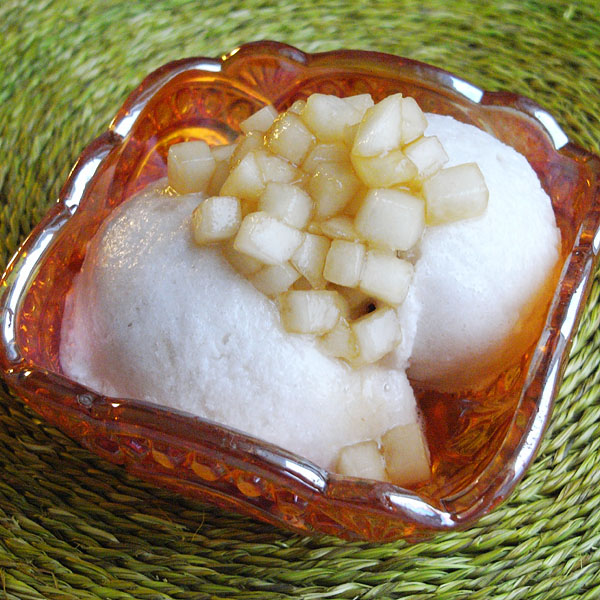
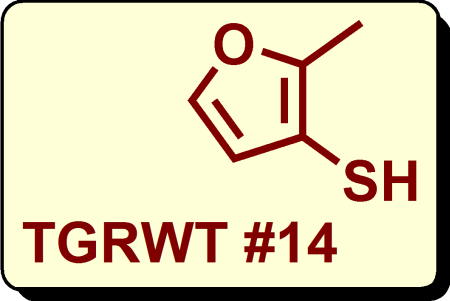
TGRWT #14: Beer sorbet with soy marinated melon

Saturday, January 31st, 2009

beer-sorbet

tgrwt-14As malt was one of the foods to pair for this month’s TGRWT I decided to do something with beer. I first considered making a beer gel since the Alinea book has a nice recipe (with potassium citrate and kappa carrageenan – I included the recipe in the hydrocolloid recipe collection), but since I didn’t have carrageenan at hand I decided to try a sorbet. A quick search gave me 4 recipes (links in the table below) and in order to compare these I decided to calculate sugar/beer and sugar/liquid ratios as these are quite crucial in order to obtain the desired consistency of a sorbet. The results are shown in the table below. (more…)

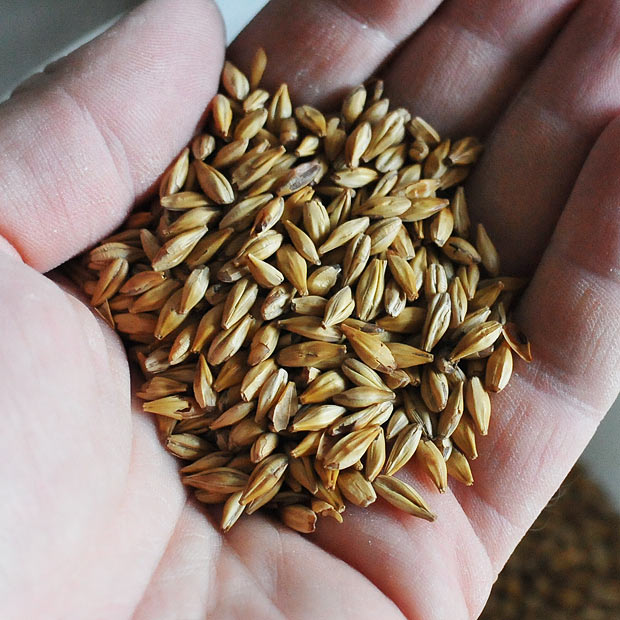
TGRWT #14: Malt and soy sauce

Saturday, January 3rd, 2009

This month’s round of the food blogging event They go really well together (TGRWT) will be hosted by Rob over at The Curious Blogquat. We’ve now come to TGRWT #14 and the foods to pair this time are malt and soy sauce (soya sauce). Regarding the malt you are free to choose whatever form you like – you can use malt extract, powdered malt, grains or even beer if you like. As usual you can cook from an existing recipe or come up with your own. The deadline for submissions is February 1st and you can find more information on how to participate in the announcement post.

And do not forget to check out the roundup of the delicious cocoa and caraway recipes from TGRWT #13.

BTW: Tomorrow I’m heading of for the flavor pairing seminar “The Flemish Primitives” in Bruges, Belgium. I’m really excited about that and I promise I’ll return with an extensive report! From the homepage I see that Sang-Hoon Degeimbre has chosen Leffe (a Belgian beer) and who knows – maybe he’ll combine it with soy sauce ;)

Lightstruck flavor in beer

Friday, February 16th, 2007

Some years ago, a group of researches studied the formation of lightstruck flavor in beer (Chem. Eur. J. 2001, 4554). They found that isohumulones, compounds contributing to the bitter taste of beer, decomposed when exposed to ultraviolet light. In a recent blogpost, Harold McGee elaborates on this and it turns out that the way this happens is even more complex than first anticipated. The researchers (J. Agric. Food Chem, 2006, 6123) found that riboflavin (vitamin B2) acts as a photosensitizer in beer (and in olive oil, milk and butter) which catalyzes the conversion of oxgyen to a more reactive type of oxygen (singlet oxygen). This oxygen then “destroys” isohumulone and in the process radicals are formed.

isohumulone1.jpg

As shown in the figure, the radical reacts with sulfur containing proteins, thereby forming a thiol called 3-methylbut-2-ene-1-thiol or just MBT for short. The amazing thing about this compound is that we can smell it at concentrations as low as a few parts per billion (ppb). The perhaps not-so-amazing thing is that this compound gives beer a “skunky” aroma. Obviously one would want to avoid this, and that’s why beer is sold in dark brown glass bottles that act as the beer’s own sunglasses. Canned beer of course will not go skunky (well not until it’s poured into a glass and served outside in bright sunlight – that will turn any beer skunky within minutes).

Unfortunately however, not all beer is sold in dark bottles! One well known brand is shown in the picture below…

corona.jpg

And yes – as you might have figured out, 3-methylbut-2-ene-1-thiol is present in Corona beer (and other brands sold in clear bottles, to a lesser extent MBT is also found in green bottled beer). For some references to “skunky” off flavours in beer check out these links: here, here and here. The ubiquitious slice of lime served with Corona beer is nothing but clever marketing since it helps camouflage the smelly thiol formed! (but how well does lime actually camouflage the thiol aroma?)

The take home message is: keep your olive oil, milk, butter and beer away from sunlight!