Posts Tagged ‘Ferran Adria’

Books for your Christmas wish list

Friday, December 16th, 2011

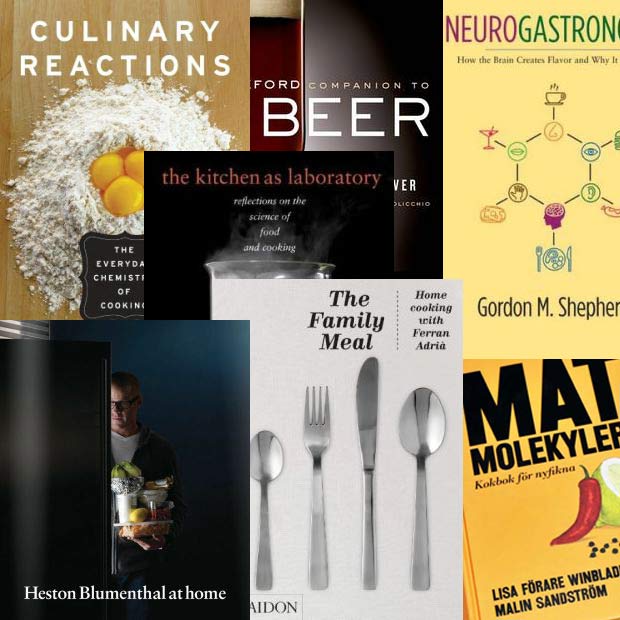
A couple of books have caught my eye during the year and have naturally made their way into my Christmas wish list (and some I’ve already ordered myself). Please let me know if there are books you belive should be on this list that I have missed.
(more…)

Cooking science – condensed matter

Monday, August 22nd, 2011

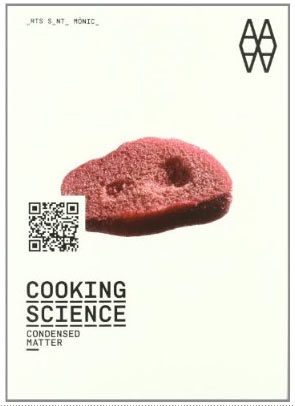
The book Cooking science – Condensed matter by Adria Vicenc came out last year, but only recently did it appear on my radar. This 75 page preview suggests that it is part coffee table book and part documentation of modern Catalan cuisine combined with short essays on various topics such as food preservation and synaesthetic cooking. Add to that a dash of technology and large photos and descriptions of a sous vide water bath, a rotary evaporator, a freeze drier etc. It’s kind of like a light version of Modernist Cuisine. In his introduction Ferran Adria states that: (more…)

Open position in science and cooking at Harvard

Monday, March 21st, 2011

I recently blogged about the public science and cooking lectures at Harvard to let you know that videos from the lectures are available for download. The public lectures accompany the course SPU-27: Science and Cooking (non-official pdf with syllabus of the course). I just got an email that they have an open position for a preceptor (a kind of lecturer). Responsibilities include:

  • Work with (and report to) the faculty members who are the principal course instructors, to prepare lecture materials, lab experiments, homework assignments, and examination questions.
  • Assist with lecturing as necessary.
  • Manage the kitchen lab space, including maintaining the inventory of equipment and food supplies, as well as ensuring food-safety status.
  • Coordinate with visiting guest chefs and lecturers, including managing their itineraries during campus visits.

Interestingly they are looking for someone with an advanced degree in physics, chemistry or a related field, preferably with a PhD. But they do not ask for knowledge about or interest in food which is kind of surprising… But they hope to get someone who speaks Spanish or Catalan – take that as a pointer to all the great work done by Ferran Adria, Jose Andres and Joan Roca, as well as the Alicia Foundation. The application deadline is April 4th. More information can be found on their homepage

Videos of Harvard lectures available

Sunday, November 21st, 2010

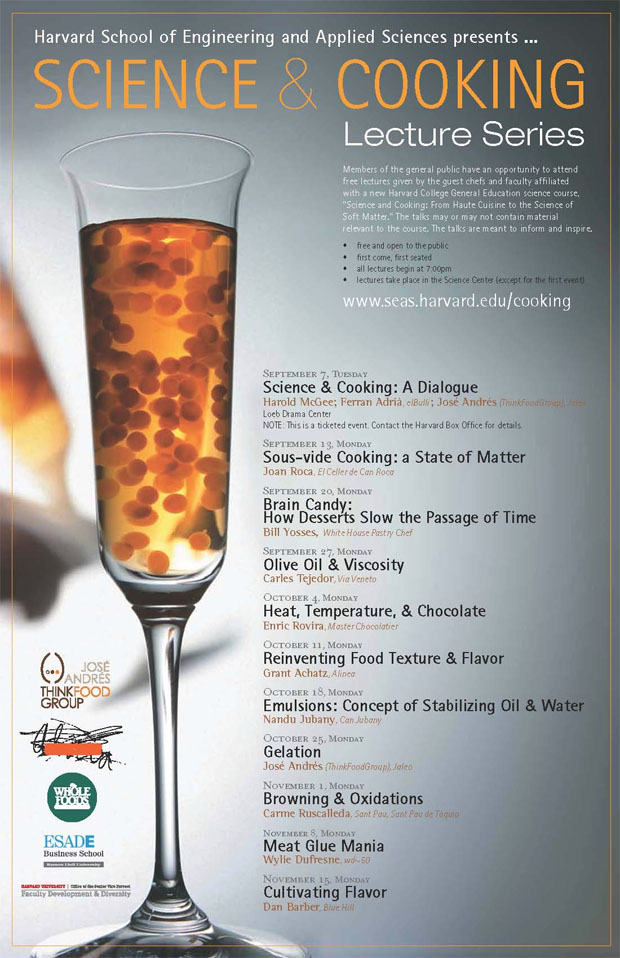
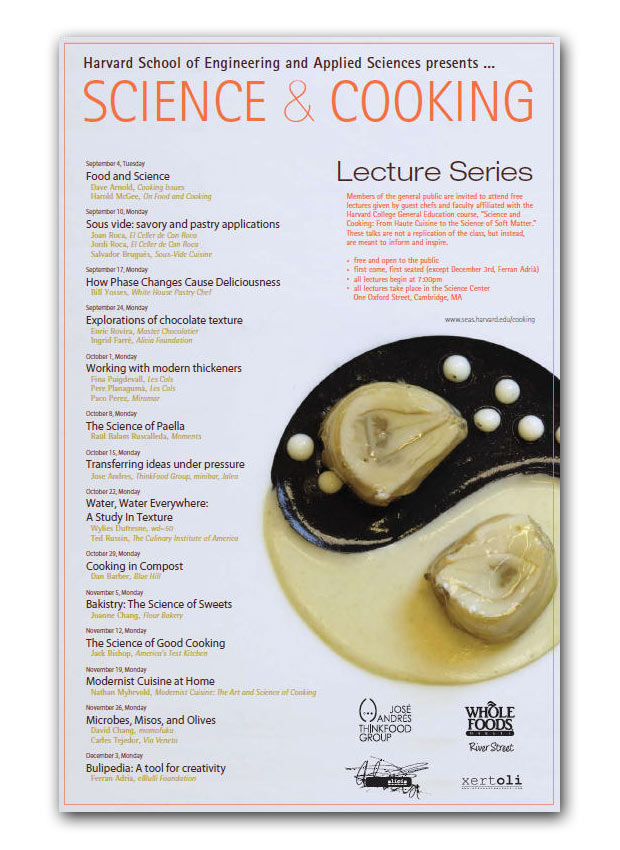
Remember the public cooking lectures at Harvard that I mentioned in September? According to the website they are *very popular* and the auditoriums are packed! This is good news, but the best thing is that the lectures are made available through YouTube and iTunes for free! So far 9 of the sessions are available, but I guess all will be available soon. If the picture is difficult to read, here’s the list of all the lectures:
(more…)

Public cooking lectures at Harvard

Monday, September 6th, 2010

The Harvard School of Engineering and Applied Sciences (“SEAS”) and the Alícia Foundation have developed a new General Education science course, “Science and Cooking: From Haute Cuisine to the Science of Soft Matter”. The class is limited to currently enrolled Harvard undergrads, but the general public will have an opportunity to attend topic-related public lectures given by the guest chefs and faculty affiliated with the course. The lectures are not a replication of the course, but will consist of a brief introduction by Harvard professors followed by a broad-based talk by the chef. The first public lecture tomorrow features Harold McGee, Ferran Adria and José Andrés, so it would be well worth a visit if you live nearby. More info on venue, times and schedule here.

[Thank's to Matthew Pierce for the tip!]

(Too many?) New books

Friday, September 11th, 2009

books-2008

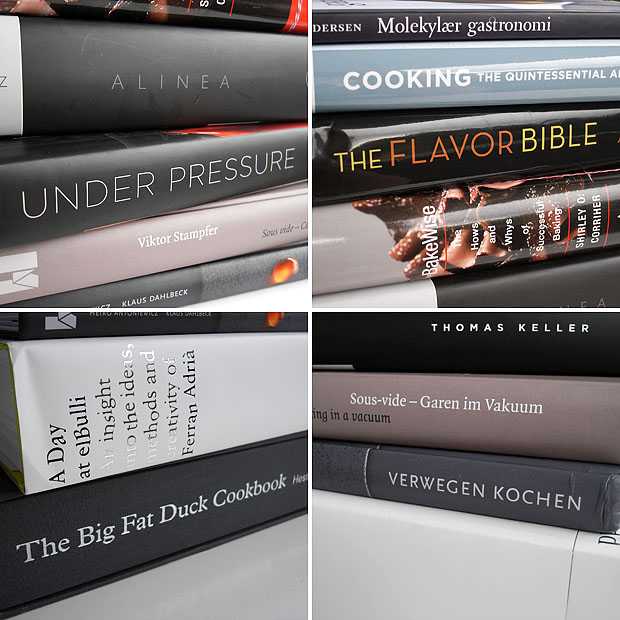
Last year’s book bonanza (Remember The Big Fat Duck Cookbook, Alinea and Under pressure right? Not to mention BakeWise, The Flavor Bible (not science, but I love their systematic approach), Cooking – The Quintessential Art, A day at el Bulli, the bilingual Sous-Vide, the German Verwegen Kochen and the Danish Molekylær gastronomi – did I miss any?) will be difficult to beat, but several interesting books will appear this fall as well. It’s as if this field is exploding with books now. When I first set up the webpages which later evolved into Khymos only a handful of books were available (you can travel back in time and view the single page from 2003 – only in Norwegian, sorry), but even I have a hard time now keeping track with all the books which cover the interesting intersection between cooking and science, aka molecular gastronomy. Sometimes I think – is this book really necessary? Do we need it? What does it add? But addicted as I am, I can’t help it – so I’ll probably get hold of most of these books as they become available :)

(more…)

Has molecular gastronomy reached the plateau of productivity?

Monday, January 26th, 2009

pipa
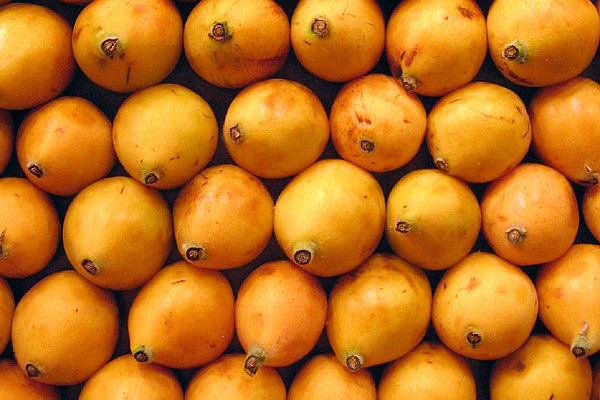
Loquat fruit (known as pipa in Chinese) piled up at Mercat St. Joseph in Barcelona.

Molecular gastronomy was recently chosen as word of the month (not quite sure exactly which month this was). They give the following definition:

the art and practice of cooking food using scientific methods to create new or unusual dishes

This is not the best definition I’ve seen, to be honest. Why should one limit it to new or unusual dishes? When taken to extremes this only results in gimmickery. Strangely enough there are no hits when I search for “molecular gastronomy” at www.askoxford.com, so one might wonder whether they changed their mind? Personally I feel that molecular gastronomy should strive to improve both home cooking and restaurant cooking. That’s also what I tried to convey with my 10-part series with tips for practical molecular gastronomy.

The Webster’s New Millennium dictionary has this definition:
(more…)

A Christmas wish list

Tuesday, December 16th, 2008

The avalanche of books in the food/science intersection this fall has been truly amazing. Three books in particular have showcased special restaurants: el Bulli, Alinea and The Fat Duck.
(more…)

A day at el Bulli

Thursday, July 24th, 2008

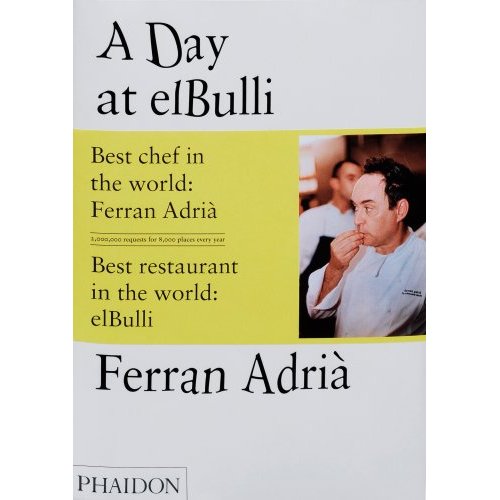
There is really no end to all the exciting books that will appear this fall! I just learnt from the molecular gastronomy mailing list that the book “A Day at el Bulli” by Ferran Adrià, Juli Soler and Albert Adrià will appear in October. The publisher let’s us know that the book

documents all the activities and processes that make up just one day of service with stunning colour and black and white photography of the kitchens, staff, creative workshop, dishes, the restaurant itself and its striking surroundings near the town of Roses, north east of Barcelona

The fact that a 600 page book covers a single day at el Bulli says a lot about how much thought they put into their cooking :)

Ten tips for practical molecular gastronomy, part 7

Monday, August 27th, 2007

book-pile-450px.jpg
Click here for full size image

7. Question authorities and learn from the experts

A thick, nicely bound cook book with marvelous pictures and a professional layout signals quality and authority. But unfortunately the nice wrapping is no guarantee that the contents is scientifically sound. I would guess that the searing/sealing myth and adding salt to water used to boil vegetables are among the most ubiquitious of the myths. The challenge for everyone is to question the procedures and explanations given in cook books and those that are inherited from your parents and grand parents. Most of them are fine, but some are not. In fact Hervé This has collected more than 20.000 so called “precisions” from French culinary books that he wants to test.

My seventh tip for pursuing molecular gastronomy in your very own kitchen is to question the cook book authorities, but also to learn from the experts in the field. The site Khymos originally started out as a listing of books and web pages that could be useful for anyone interested in molecular gastronomy and popular food science. When giving presentations it was more convenient for me to refer to a webpage than to have people taking notes of all the references. My own collection of books is constantly growing as you can see from the picture (I justed crossed the 100 cm mark), and I am more than happy to share with you my favorite books. Most of what I know about food chemistry and molecular gastronomy is from these books.

book-pile-meter.jpg

Molecular gastronomy should of course never become a theoretical practice only, so remember that “the proof is in the pudding”, as Nicholas Kurti, one of the pioneers of molecular gastronomy often said. Let taste guide your cooking and learn how to conduct simple blind tastings (more on that in part 8). If possible, do an experiment: if there are two or more procedures, follow them and compare the end result.

Despite the many books and articles that have appeared on food chemistry and molecular gastronomy there are still many questions that remain unanswered. Scientifically, molecular gastronomy is tremendously complex. The science of deliciousness lies in the cross section of analytical, biological, inorganic, organic, physical, polymer and surface chemistry. But even though describing and understanding what happes is difficult, everyone is able to judge the end result! This is quite intriguing and because of this it is possible to become an excellent cook – even if you don’t understand the chemistry behind in every detail. This makes me confident that there will always be an “art” and a “love” component in cooking, as Hervé This puts it in his definition of molecular gastronomy.

*

Check out my previous blogpost for an overview of the 10 tips for practical molecular gastronomy series. The collection of books (favorite, molecular gastronomy, aroma/taste, reference/technique, food chemistry, presentation/photography) and links (webresources, people/chefs/blogs, institutions, articles, audio/video) at khymos.org might also be of interest.