Posts Tagged ‘Peter Barham’

Book review: Ideas in food – Great recipes and why they work

Friday, August 19th, 2011

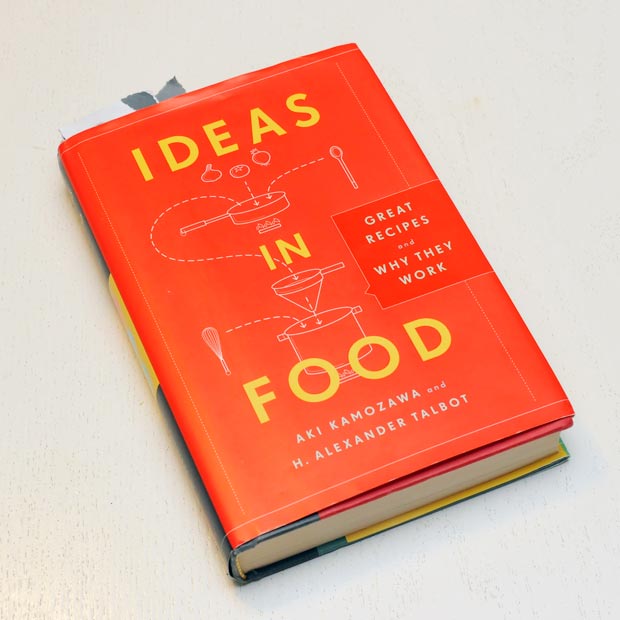
Readers well aquianted with the food blogosphere will likely be familiar with Aki Kamozawa and Alex Talbot’s blog Ideas in food. Since December 2004 they have generously shared pictures, ideas, insights and inspirations online. As chefs they have eagerly integrated modernist techniques and elements in their cooking, allowing technology to improve their cooking whenever possible. No wonder I’ve been a long time follower of their blog! And needless to say I was also exicted to receive a review copy of their recent book Ideas in food: Great recipes and why they work.

First and foremost the book is a great collection of ideas explored by the authors. The ideas are exemplified through recipes (about 100 in total) which showcase the creativity of the authors, from the simple (more…)

Copenhagen MG seminar: Ice cold world record attempt (part 7)

Friday, April 29th, 2011


Peter Barham on his way to beat the current world record for the fastest ice cream

In case you didn’t know the current world record for the world’s fastest ice cream is 10.34 seconds! To obtain the record you have to make one liter of ice cream from milk, sugar and flavoring (no eggs). Liquid nitrogen is used to rapidly cool and freeze the ice cream mixture. The current record was achieved by Andrew Ross (UK) at Cliffe Cottage in Sheffield,​ South Yorkshire,​ UK, on 6 June 2010. Prior to that the world record belonged to Peter Barham who in 2005 shaved two seconds of his previous record, ending at 18.78 seconds. To conclude his presentation on how food can be used to make students interested in physics and chemistry Peter decided to beat the current world record. Here’s a video of how it went:
(more…)

Copenhagen MG seminar: Food and science fun (part 6)

Thursday, April 28th, 2011


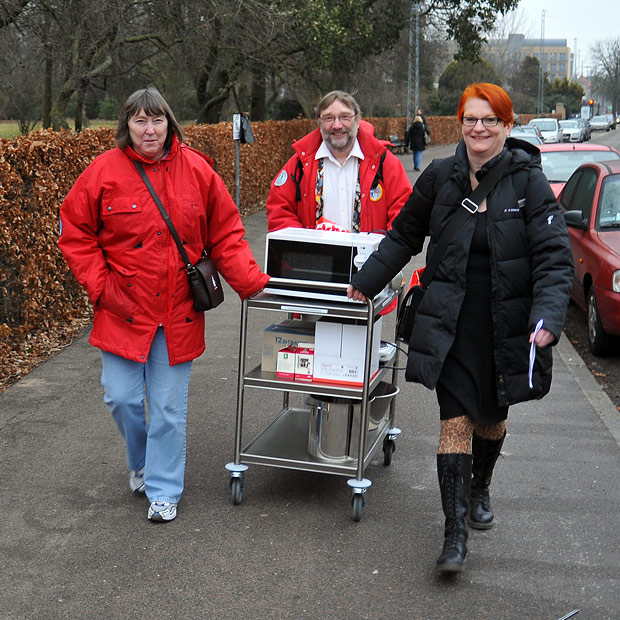
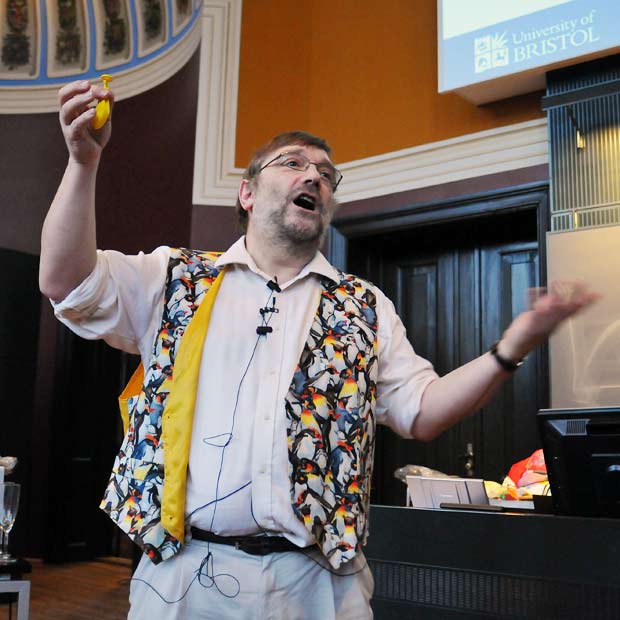
How much does air weigh? With a balloon and a microwave oven you can easily find out says Peter Barham.

Peter Barham’s presentation at the MG seminar in Copenhagen focused on how food can be used to make students interested in physics and chemistry (not a bad thing, especially since 2011 is the International Year of Chemistry) -Most people think science is boring and difficult, he said. But demos can help bring science to life, and believe it or not – experiments are much better when they go wrong. Using balloons, champagne, potatoes and liquid nitrogen Peter Barham proved his point. (more…)

New journal to launch soon: Flavour

Thursday, April 7th, 2011

While we’re still waiting for the first edition of International Journal of Gastronomy and Food Science to appear: I learnt in the Copenhagen MG seminar that yet another journal is to launch soon – the Flavour journal published on BioMed Central. It’s open source (= free) which is good news for chefs and other enthusiasts without an academic afficiliation that gives access to journals. The chief editors are Per Møller and Peter Barham (co-authors of the highly recommended molecular gastronomy review). – I am passionate about good food and cooking, so I hope that the articles in Flavour will not only further our understanding of all the processes that go to developing and appreciating the flavour of the food we eat, but will also provide me, and many others with new ideas to try out in our own kitchens so we can prepare ever better dishes, says Peter Barham.
(more…)

Molecular gastronomy seminar at the University of Copenhagen (part 1)

Friday, March 4th, 2011


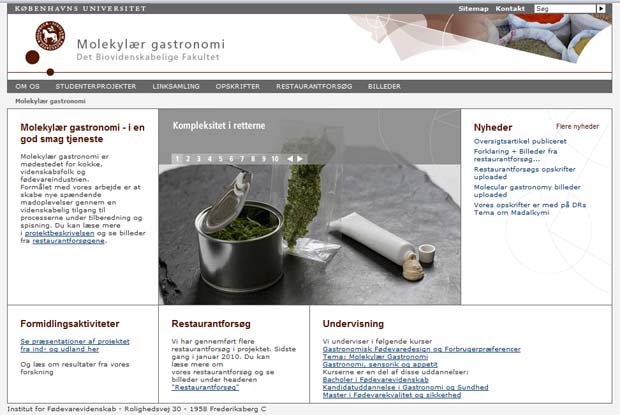
Homepage of the molecular gastronomy project at the University of Copenhagen (sorry – only in Danish as far as I know)

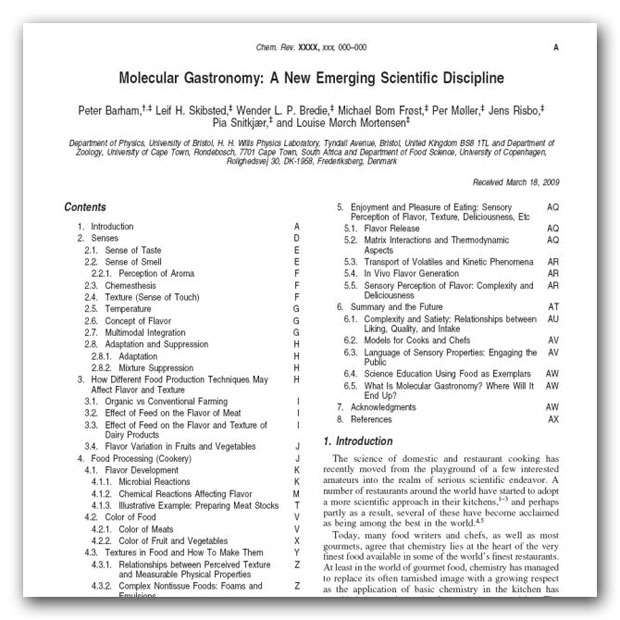
The research project Molecular gastronomy – the scientific study of deliciousness and its physical and chemical basis (Danish homepage) funded by The Danish Research Council was started in 2006. Led by prof. Leif Skibsted people from the Food Chemistry (Jens Risbo, Pia Snitkær Nielsen, Louise Mørch Mortensen) as well as the Sensory Science group (Michael Bom Frøst, Wender Bredie, Per Møller, Line Holler Mielby, Ditte Hartvig) at the Department of Food Science at Copenhagen University have been involved. In addition gastronomic entrepeneur Claus Meyer (noma co-founder) and physics professor Peter Barham (Bristol University) have contributed, as well as the chefs Thorsten Vildgaard (noma/Nordic Food Lab) and Bo Frederiksen (Meyers Madhus). Any of the names sound familiar? They should if you’ve read the recent review published in Chemical Reviews: Molecular Gastronomy: A New Emerging Scientific Discipline where several of the people involved in the project contributed as authors. This landmark paper summarizes and lays out research opportunities in molecular gastronomy, the branch of food science that deals with The art and science of choosing, preparing and eating good food to quote Thorvald Pedersens definition – he is a professor emeritus in chemistry that played an important role helping to establish molecular gastronomy as a research field at the University of Copenhagen.

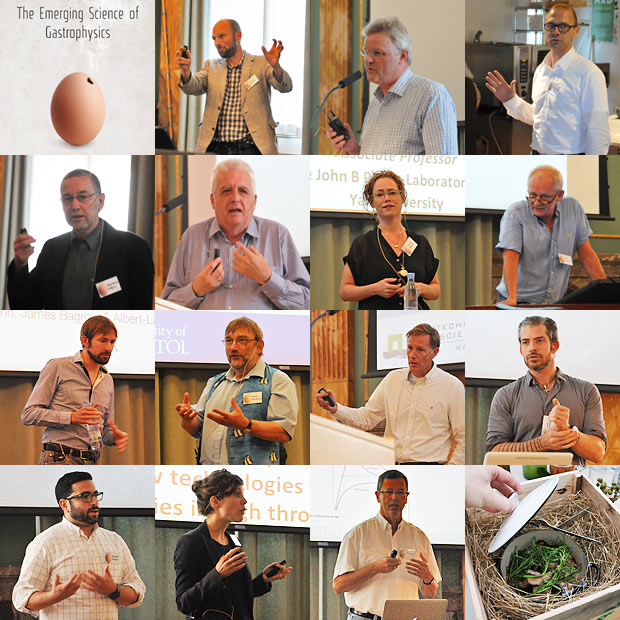
To mark the end of the project a seminar was organized on March 2nd 2011. The program included the following presentations:
(more…)

Major review on molecular gastronomy published

Monday, February 22nd, 2010

I just received an alert today about a major review article on molecular gastronomy: Molecular Gastronomy: A New Emerging Scientific Discipline (DOI: 10.1021/cr900105w) is a British-Danish joint publication by Peter Barham, Leif H. Skibsted, Wender L. P. Bredie, Michael Bom Frøst, Per Møller, Jens Risbo, Pia Snitkjær, and Louise Mørch Mortensen. Peter Barham is a professor in polymer physics at the University of Bristol, author of The science of cooking and probably doesn’t need further introduction. The Danes are all associated with the Department of Food Science at the University of Copenhagen and have a varied background in chemistry, food science, sensory science and psychology background. Check out the links to their individual profiles more info on projects and publications. Leif H. Skibsted and Michael Bom Frøst head several molecular gastronomy related projects. The Danish scientists also work closely together with Claus Meyer, chef at Meyers madhus and visiting professor at Copenhagen University, and Torsten Vildgaard, assistant head chef at Denmark’s gastronomic shining star Noma (which Claus Meyer started together with René Redzepi in 2004 – they were ranked 3rd in Restaurant magazines top 50 list for 2009, only surpassed by el Bulli and The Fat Duck).

Considering the impact factor of Chemical Reviews (ranked as a clear no. 1 among chemistry journals), this review will likely remain the review on molecular gastronomy for years to come – so you can just as well go ahead and read it. It’s got a whopping 53 pages and more than 350 references, and will be very useful for further studies and research. Oh, and the authors have opted for sponsored access, meaning that you can download the whole review for free!


(more…)

New “Culinary chemistry” chair in Copenhagen

Tuesday, November 10th, 2009

UoC-logoThe University of Copenhagen wishes to appoint a professor with special responsibilities in Culinary Chemistry from 1 June 2010 or as soon as possible thereafter. As you may remember, Thorvald Pedersen was appointed professor of “Molecular gastronomy” some years ago for a limited time. One of the tasks then was to establish molecular gastronomy as a field of study at Copenhagen University (then KVL). As a result prof. Leif Horsfelt Skibsted and colleagues initiated several projects related to molecular gastronomy (only Danish text on site). Today Peter Barham is one of several affiliated professors at the Food Science department in Copenhagen, and over the last couple of years he’s been involved in activities which ultimately have lead to the creation of this new post.

I quote the following from the job description:
(more…)

Towards the perfect soft boiled egg

Thursday, April 9th, 2009

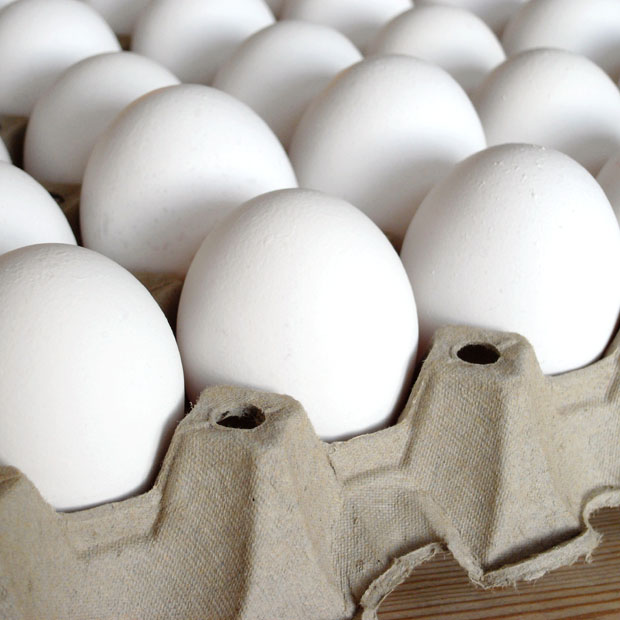
egg-tray

Many cookbooks suggest the following for boiling eggs: 3-6 min for a soft yolk, 6-8 min for a medium soft yolk and 8-10 min for a hard yolk. If you are satisfied with this, there is no need for you to continue reading. But if you’ve ever wondered whether the size of an egg has any impact on the cooking time you should read on. And if you search the ultimate soft boiled egg we share a common goal! From a scientific view point, a cooking time of approximately 3-8 minutes to obtain a soft yolk is not very precise. A number of important parameters remain unanswered: What size are the eggs? Are they taken from the fridge or are they room tempered? Are they put into cold or boiling water? And if using cold water – when should the timer be started? When the heat is turned on or when the water boils? And would the size of the pan, the amount of water and the power of the stove top matter?

(more…)

The Flemish Primitives: A travel report (part 1)

Friday, January 9th, 2009

I had a wonderful trip to Brugge/Bruges to attend the foodpairing seminar The Flemish Primitives. I got to meet many interesting people including Heston Blumenthal, Peter Barham, Andrew Dornenburg, Karen Page, Ben Roche and Tony Conigliaro to mention a few. I also finally had the opportunity to talk to my fellow Swedish food bloggers Lisa Förare Winbladh (Matälskaren, Swedish only but Google can translate) and Malin Sandström (Matmolekyler, Swedish only but Google can translate) who’ve recently been awarded money to write a Swedish book about molecular gastronomy for home cooks. I even talked to several people who read Khymos! It’s always nice when I can attach some faces to the crowd out there in the big, unpersonal blogosphere.

As you see from this long post the day was packed and believe it or not – there will be a couple more posts in the next few days. One on the surprise “chocolate box” (for me this was the highlight), a summary of the interview with Heston Blumenthal and some info on the chemistry behind the glowing lollipops! I’ll also try do dig up the recipe for the chocolate dip that came with our lunch fries.
(more…)

A Christmas wish list

Tuesday, December 16th, 2008

The avalanche of books in the food/science intersection this fall has been truly amazing. Three books in particular have showcased special restaurants: el Bulli, Alinea and The Fat Duck.
(more…)