Posts Tagged ‘salt’

10 elements of basic kitchen knowledge

Tuesday, May 13th, 2008


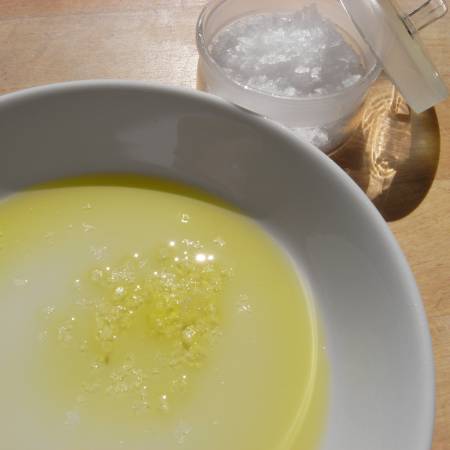
Salt in oil. According to Pierre Gagnaire, this is Hervé This’ main discovery. It allows him to sprinkle salt on dishes without the salt dissolving in water from the dish. Thereby the “crunch” of the salt is retained.

Rob Mifsud, perhaps best know for his Hungry in Hogtown blog has interviewed Hervé This. At the end of the interview Hervé lists 10 elements of basic kitchen knowledge. Some may seem obvious, but they are not, according to Hervé. Here’s the list so you can judge by yourselves:

  1. Salt dissolves in water.
  2. Salt does not dissolve in oil.
  3. Oil does not dissolve in water.
  4. Water boils at 100 °C (212 °F).
  5. Generally foods contain mostly water (or another fluid).
  6. Foods without water or fluid are tough.
  7. Some proteins (in eggs, meat, fish) coagulate.
  8. Collagen dissolves in water at temperatures higher than 55 °C (131 °F).
  9. Dishes are dispersed systems (combinations of gas, liquid or solid ingredients transformed by cooking).
  10. Some chemical processes – such as the Maillard Reaction (browning or caramelizing) – generate new flavours.

Suppression of bitterness

Sunday, October 1st, 2006

I received an email last week from a supertaster (read more: BBC, Wikipedia) with an interesting question: Certain foods contain bitter substances that only a fraction of the population can taste. Examples include a group of compounds called cucurbitacins, found in melon and cucumbers, and propylthiouracil in broccoli. The question was whether these compounds could be neutralized by any means.

A very simple chemical that neutralized/modifies bitter taste is salt – and the best thing is that you don’t have to be a supertaster to test this. For a simple experiment, take tonic water, taste it and then stir in some salt (start with 1/2 teaspoon). Taste it again – if you can still taste the quinine, add a little more salt. At one point the bitter taste has almost disappeared! This principle might work for cucumbers and melons as well, but of cource there could be totally different taste mechanisms responsible for the bittertaste in the two cases.

tonic water

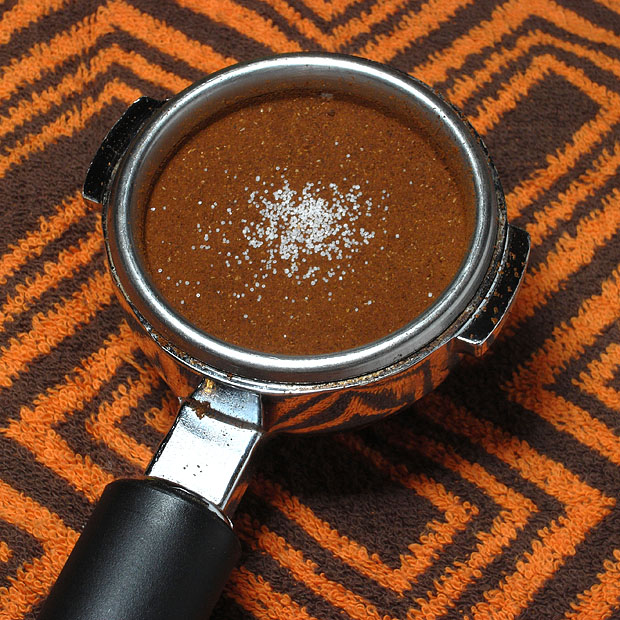
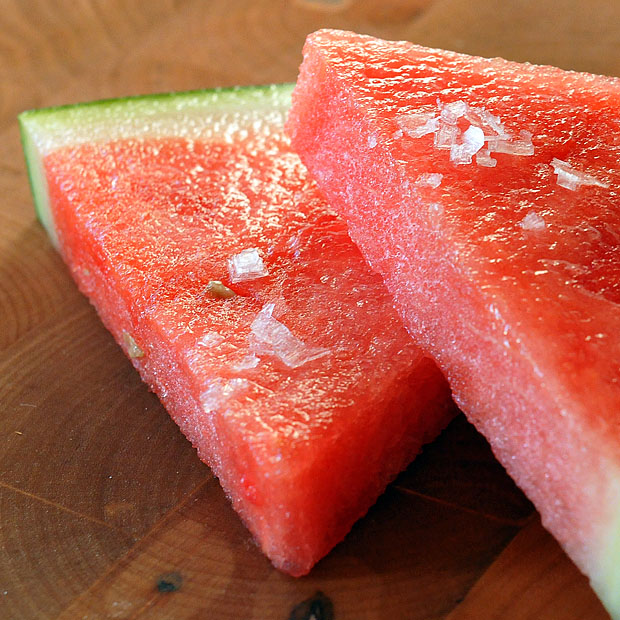
It might sound strange to add salt, but in Asia, it is not uncommon to eat different fruits with salt. I am aware of unripe mangoes, guavas and honey dew melon are eaten with salt, a salty spice and soy sauce respectively. Also – some people add a small amount of salt to the water when brewing coffee – this reduces bitterness and rounds of the taste. One last example is how salty food can make a young red wine with plenty of tannins more pleasent to drink. Tannins (polyphenolic compounds) can be both astringent and bitter, depending on their molecular weight (low molecular weight tannins are predominantely bitter whereas larger molecules are more astringent).

BTW, this has also been treated scientifically. See for instance: Breslin, P. A. S; G.K. Beauchamp, “Suppression of Bitterness by Sodium: Variation Among Bitter Taste Stimuli” Chemical Senses 1995, 20, 609-623 (link).